
 NL
NL
For centuries, November’s birthstone has fascinated gem enthusiasts, historians, and jewelry lovers alike. While most people know this crystal simply as topaz, the story of this gemstone is far richer and more intricate than its designation as a birthstone. Its dazzling colors, legendary associations, and remarkable size make it one of the most intriguing stones in the world of jewelry and gemology.

A Gemstone with a Complex History
The history of this golden and sometimes blue gemstone dates back over 2,000 years. Ancient Egyptians believed that the golden hues of the stone were a gift from Ra, the sun god. Historical records, however, sometimes describe a greenish gem, which likely referred to peridot or chrysolite, known in antiquity as the “golden stone.”
For centuries, all yellow stones were often categorized under this name. Greek scholar Pliny wrote about it, and the King James Bible mentions a yellow gemstone called topaz, though it probably encompassed various yellow minerals. These early misclassifications reveal just how confusing the gemstone world could be before modern mineralogy.
Interestingly, this crystal also occurs in stunning shades of blue, though ancient cultures did not realize it. Some Biblical references note that a stone in Aaron’s breastplate was this gemstone, though historical confusion over names suggests it may have been a visually similar mineral. Knowing this helps collectors understand that many ancient crowns and jewelry pieces may not contain the gems we assume today.


The Origin of the Name
The word “topaz” itself is a puzzle. In Greek and Roman times, any yellow gemstone might be called by this name. The island of Topasios produced peridot, which was also referred to as topaz, further complicating the story. During the Middle Ages, gemologists began using the term more accurately, though mislabeling still occurs. Even today, citrine or heated amethyst is sometimes identified as this stone. Understanding its etymology provides insight into why the gemstone market has been historically confusing.
The Colorful World of Topaz
Pure topaz is naturally colorless. Its wide array of hues arises from trace elements such as iron and chromium. As a result, this crystal may appear in wine red, straw yellow, white, grey, green, blue, or orange. Its glassy transparency makes it a favorite for both classical and modern jewelry designs.
Historically, yellow and orange stones were most popular, especially in the 18th century. Today, blue varieties dominate the market. Treated stones, known as “mystic topaz,” involve heating, coating, or irradiation to create pink, purple, or rainbow-like colors. Natural blue stones, however, remain highly prized, with major sources in Brazil, Ukraine, and the United States.
Imperial varieties, often golden-orange to pink, are rare and especially valuable. Even more unusual are violet and red versions, which collectors often covet due to their scarcity. Regional facts also add richness to the story: in Texas, pale blue specimens exist but are not commercially mined. Nevertheless, blue stones were declared the official gemstone of Texas in 1969 and of Utah the same year, reflecting their cultural significance.


Identifying the Real Gemstone
Identifying this gemstone can be tricky, especially given its treatments. It ranks 8 on the Mohs hardness scale, making it durable yet softer than diamonds, rubies, emeralds, and sapphires. Its perfect cleavage and color variations at different angles make identification a challenge. Heating and irradiation further complicate distinguishing natural from treated stones.
For collectors, jewelers, and buyers, knowledge is essential. Ensuring authenticity can prevent mistakes such as purchasing glass, synthetic crystals, or improperly treated stones. Understanding its physical characteristics, including transparency, refractive properties, and hardness, is key to making informed decisions.
Legends and Beliefs
This gemstone has inspired myths and beliefs across many cultures. Ancient Greeks and Romans associated it with Zeus and Jupiter, claiming it could enhance strength and improve eyesight. Egyptians used amulets to prevent injury, while medieval Europeans believed they could heal both mental and physical ailments and protect against death.
Other traditions hold that this stone can attract happiness, intelligence, and fertility. During the Renaissance, it was thought to break spells and calm anger. In India, it was considered sacred, bringing wisdom and longevity, and in Africa, shamans used it in healing rituals and sacred ceremonies.
In the 19th century, imperial varieties mined in Russia’s Ural Mountains were reserved for royalty. Medieval texts, such as the 13th-century Book of Raziel, describe carved stones bringing favor from kings and princes. St. Hildegard recommended using it for eye ailments and placing it under a pillow to prevent nightmares. Gold-colored stones were believed to attract wealth, protect against magic and greed, encourage weight loss, and even enhance romantic prospects.
As November’s birthstone, this gemstone symbolizes strength, prosperity, and enduring beauty. Blue variations are celebrated as December’s birthstone, while imperial stones mark the 23rd anniversary, making them versatile in both jewelry and tradition. encourage love and weight loss. As the birthstone of November, topaz symbolizes strength, prosperity, and long-lasting beauty.
-
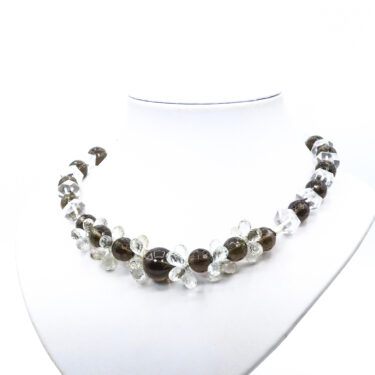
 brown topaz necklace (1 available)€ 295.00
Topaz in History and Culture
Some stories of this gemstone are almost unbelievable. In 1740, Brazilian miners discovered what they believed to be a 1,640-carat diamond, later set in the Portuguese crown. Modern analysis suggests it was actually a colorless stone of this variety. Victorian-era collectors prized pink varieties, often combining them with heat-treated golden stones from Brazil to create lavish jewelry pieces.
Royal and religious treasures have long included this gem. The Pope’s Mitra Preciosa is adorned with gold, pearls, and this crystal, while Thailand includes it in a nine-stone royal decoration system. Biblical references also associate it with the seventh pillar of the New Jerusalem, although it may have been a different stone historically country’s nine-stone royal decoration system. Biblical references associate topaz with the seventh pillar of the New Jerusalem.
Impressive Sizes
One remarkable feature of this gemstone is its potential size. Faceted stones can be among the largest gemstones in the world. A Brazilian crystal weighing 20,000 carats (about 600 pounds) is displayed at New York’s Museum of Natural History. An even larger pale blue stone, known as the “Brazilian Princess,” weighs 21,327 carats and resides in the Smithsonian Institution in Washington, DC. These extraordinary specimens highlight the unique appeal of this crystal, making it a favorite among collectors and museums alike.
Caring for Your Gemstone
To preserve the beauty of this crystal, certain precautions are essential.
- Avoid prolonged exposure to direct sunlight, as some colors may fade.
- Protect from extreme temperature changes and acids, which can damage the stone.
- Clean gently with warm water and mild hand soap.
Proper care ensures that jewelry retains its brilliance and that heirlooms can be passed down through generations.


Conclusion
November’s birthstone is a gemstone full of history, beauty, and intrigue. Its dazzling colors, fascinating myths, and massive crystals make it truly unique, yet buyers must take care to identify genuine stones rather than treated or synthetic versions. With careful attention, proper care, and a bit of knowledge, this gemstone remains a stunning addition to jewelry collections worldwide.
FlorenceJewelshop also offers a free PDF packed with information about birthstones, this gemstone, and other fascinating gems. It’s a perfect resource for collectors, jewelry enthusiasts, or anyone who wants to explore the beauty and history of precious stones.

"*" indicates required fields
Hug Florence of FlorenceJewelshop