
 NL
NL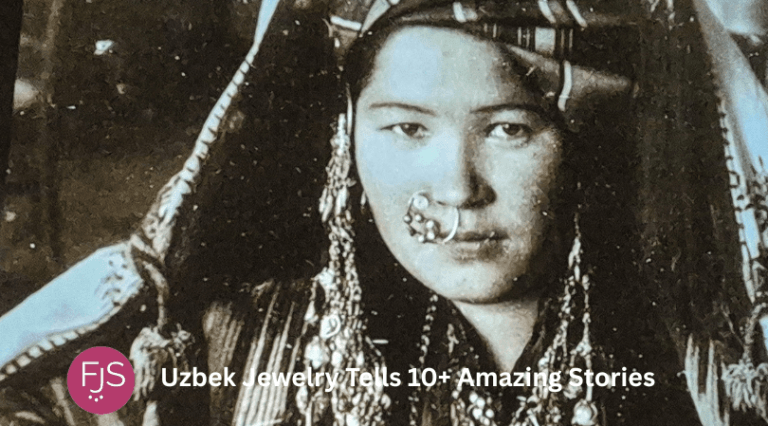
Uzbek jewelry tells a story of beauty, craftsmanship, and cultural heritage, and my fascination with it began over 34 years ago. Back then, I traveled to Uzbekistan as a tour operator to explore whether trips to this extraordinary country could be organized. Once part of the legendary Silk Road, Uzbekistan’s oases were the perfect places for traders to rest, replenish, and sell their goods. The cities were large and remarkably wealthy for their time, which was reflected in their breathtaking architecture and the exquisite jewelry their people wore.
My first journey in 1991 didn’t go exactly as planned. The Fergana Valley was off-limits, and in Khiva, to me, the most beautiful city in Uzbekistan, President Charles de Gaulle happened to be visiting. For safety reasons, everyone was ordered to leave the city.
Unfortunately, my hiding place was discovered, and even though I claimed my French was good enough for a friendly chat with the president, I was firmly escorted out. Needless to say, I didn’t get to see enough to design a proper travel itinerary back then.
Yet the spark never faded. Last month, I finally returned to Uzbekistan, a country that has transformed beyond recognition. It’s more vibrant, welcoming, and inspiring than ever before.
And this time, I was captivated by the traditional Uzbek jewelry: stunning pieces that reflect centuries of artistry and symbolism. Their intricate silver work, colorful stones, and timeless designs tell the story of a proud heritage that continues to shine. I’m excited to share these extraordinary creations with you soon.
The Timeless Art of Uzbek Jewelry: Stories in Silver and Stone
In the heart of Central Asia, where the ancient Silk Road once wound through deserts, mountains, and bustling bazaars, lies a tradition that has shimmered for thousands of years. The art of Uzbek jewelry is as old as the land itself, woven into the very fabric of its history. More than just adornment, each piece of Uzbek jewelry tells a story of faith, identity, and the enduring connection between beauty and protection.
The origins of jewelry making in Uzbekistan stretch back to the dawn of civilization. Archaeological finds reveal that long before written history, people in this region were already working with gold, silver, and copper, shaping them into intricate ornaments. These early creations were not merely decorative. They carried meaning, power, and a belief that metal and stone could hold spiritual energy.
By the 19th century, the craft had reached its golden age. Cities such as Khiva, Bukhara, Samarkand, Karshi, and Kokand became renowned centers of jewelry making. Each city had its own distinct style and artistic identity, reflecting local traditions, beliefs, and the rhythms of daily life. Though separated by geography, all shared a single belief: that jewelry was more than something to wear, it was a symbol of life itself.
The Great Centers of Uzbek Jewelry
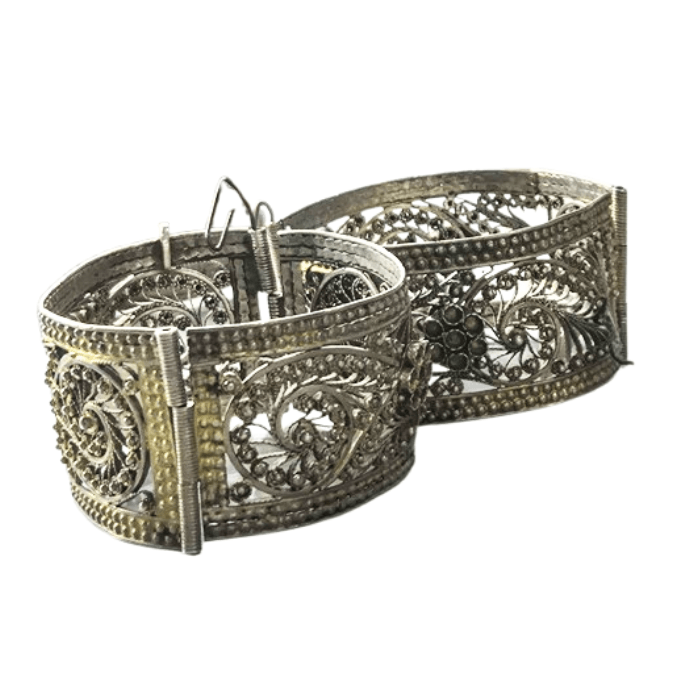
In Khiva, jewelers were masters of delicate metalwork. Their pieces seemed almost like lace spun from silver, with fine filigree patterns that danced in the light. Bukhara, long a spiritual and intellectual center, favored jewelry with deep symbolic meaning. Amulets engraved with sacred words or geometric patterns were common, serving both as decoration and divine protection.
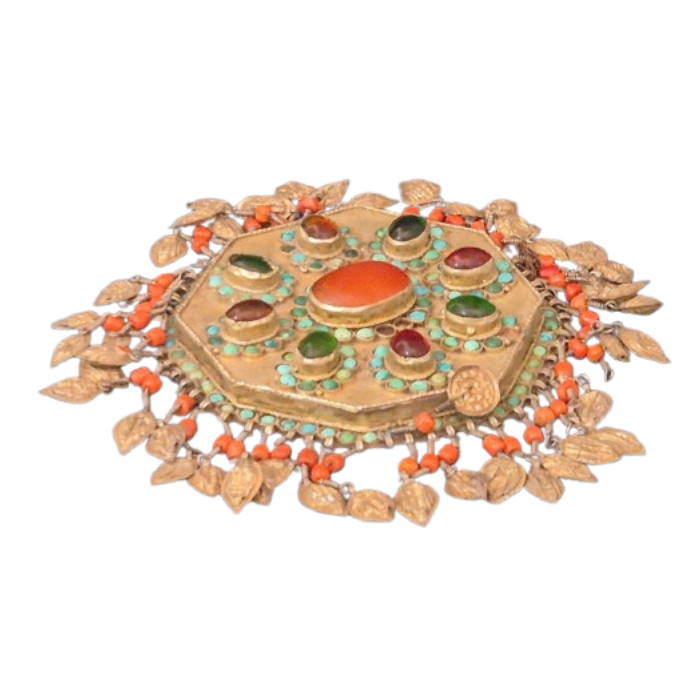
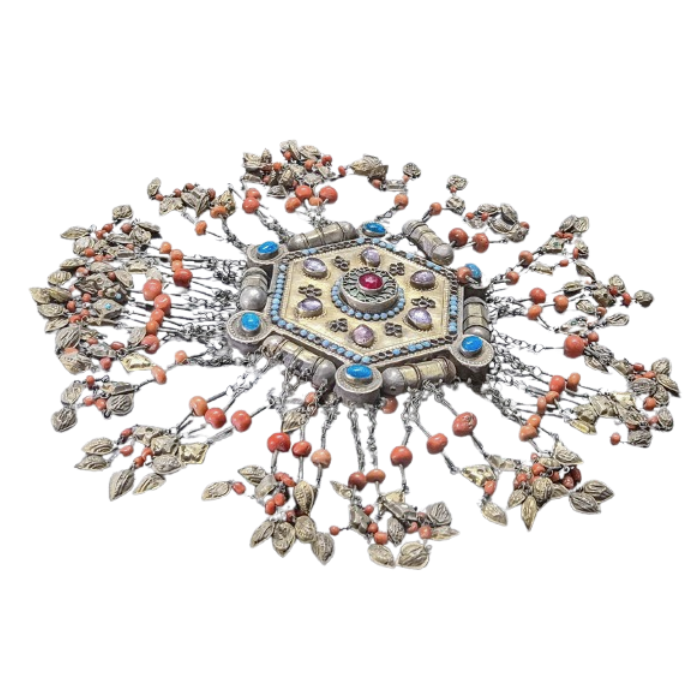
Samarkand, a city that once dazzled travelers with its blue-tiled mosques and markets bursting with color, produced jewelry that mirrored its vibrancy. Craftsmen combined silver with coral, turquoise, and carnelian, creating bright contrasts that symbolized life and abundance. Karshi and Kokand, on the other hand, favored bold geometric forms — triangles, diamonds, and zigzag patterns — symbolizing balance and strength.
Every region, every workshop, every artisan had its own voice. Yet together, these centers gave birth to the rich and diverse world of Uzbek jewelry, a heritage that still shines today.
Jewelry Through a Woman’s Life
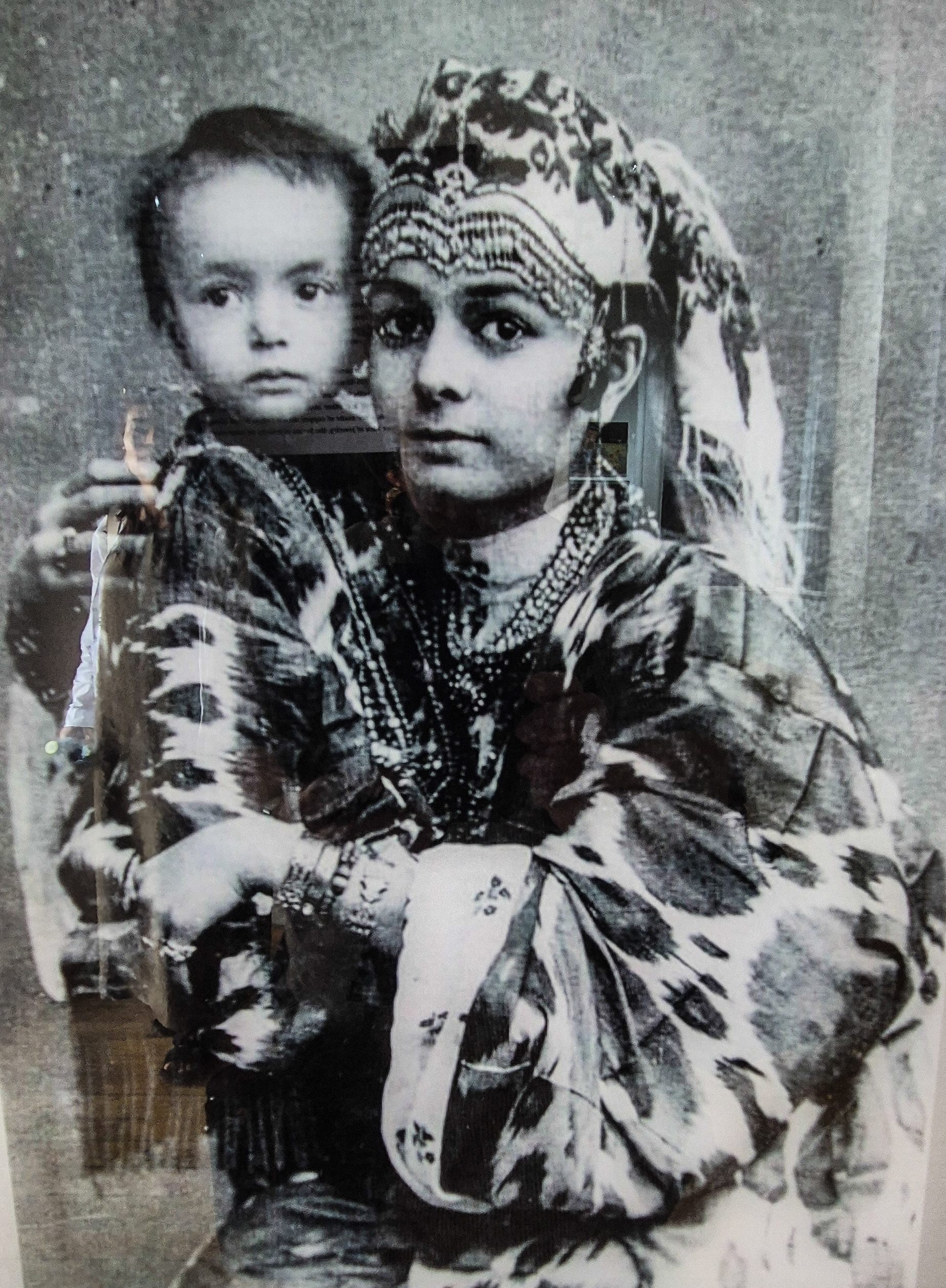
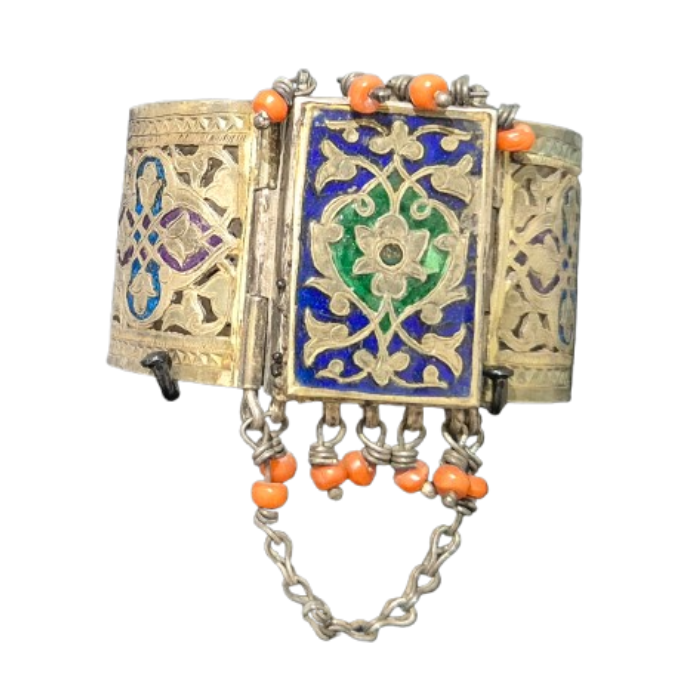
In traditional Uzbek culture, jewelry marked every stage of a woman’s life. From infancy to old age, her adornments told her story. Even as a baby, a girl might wear small silver bracelets or earrings. These were not just for beauty; they were protective charms meant to ward off the evil eye and bring blessings to the child.
As the girl grew older, her jewelry collection expanded. Each piece was more than a gift — it was a memory, a wish, or a promise. A bracelet from a grandmother might carry the warmth of generations. A pendant from a mother might hold a prayer folded inside. Uzbek jewelry accompanied a woman through every joy and challenge, evolving as she did.
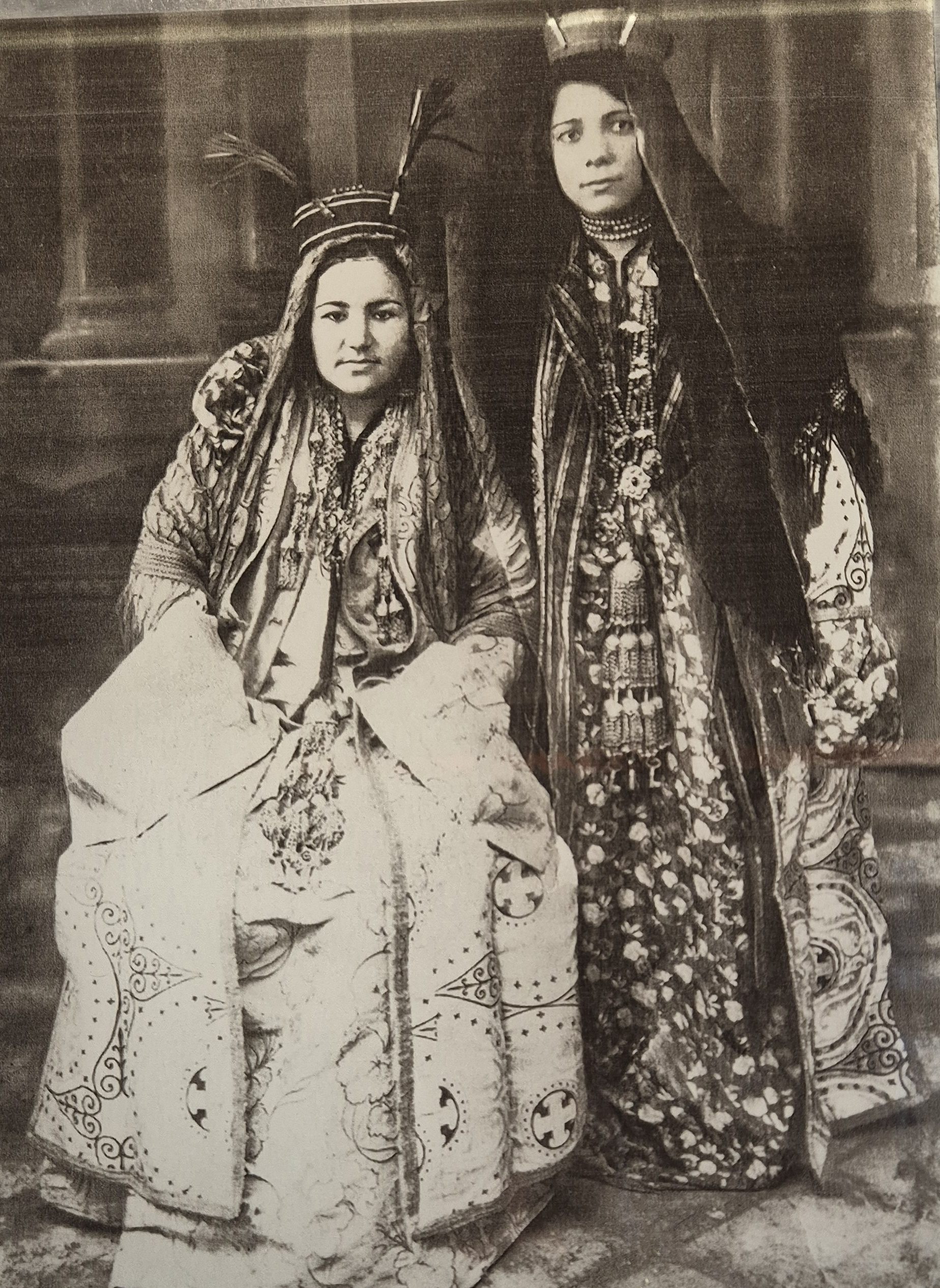
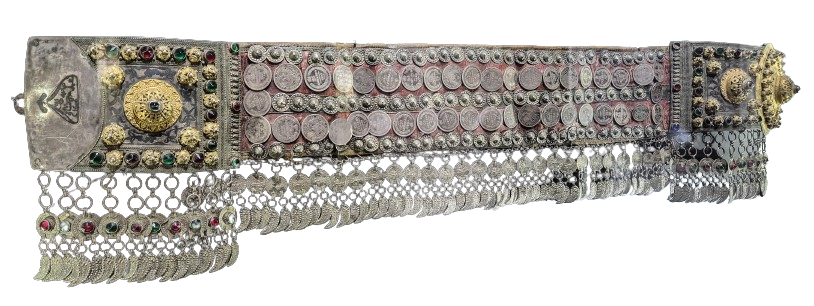
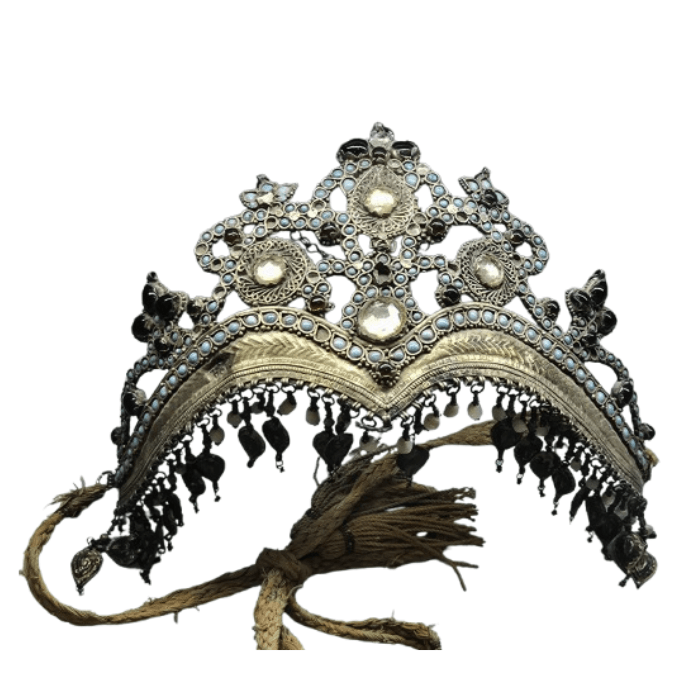
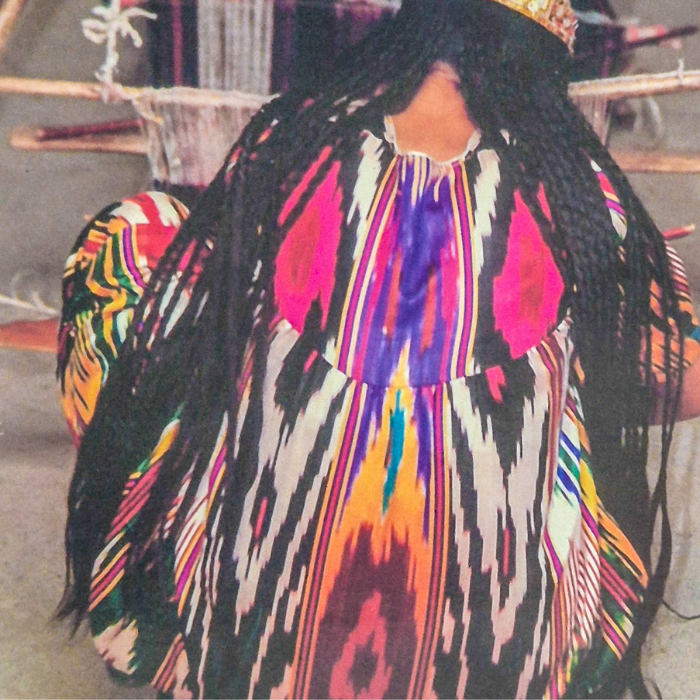
The most splendid display came on a woman’s wedding day. A bride would wear layers upon layers of jewelry, sometimes weighing as much as five kilograms in total. Silver gleamed on her neck, head, wrists, and chest. Her jewelry framed her face like a crown of light, transforming her into a living embodiment of prosperity and protection.
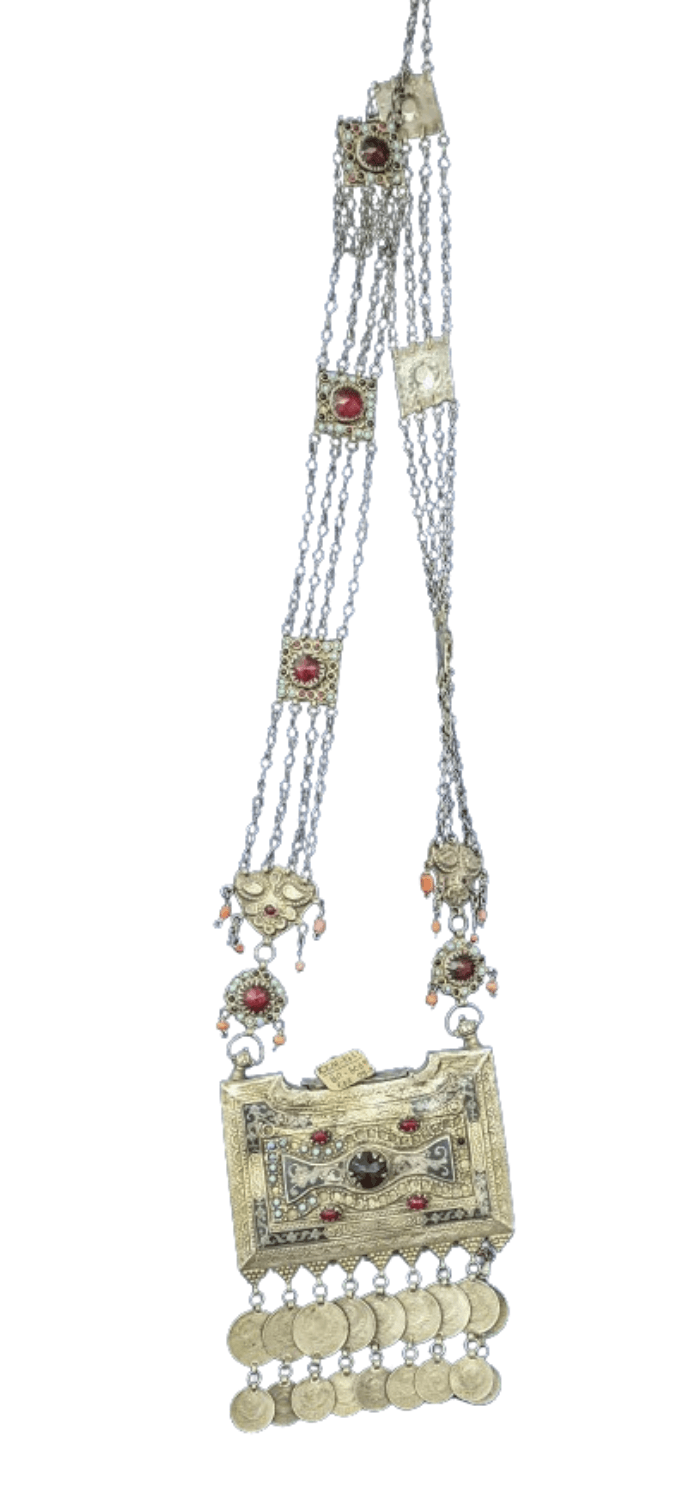
The ornaments served several purposes. They symbolized the wealth and honor of the bride’s family, protected her from misfortune, and announced her new status as a married woman. Certain designs were worn only by married women — especially large chest ornaments or elaborate necklaces with central medallions. These pieces represented fertility, devotion, and the continuity of family. When a woman stepped out wearing such jewelry, everyone could see that she was now part of a new household, blessed and protected.
The Language of Shapes
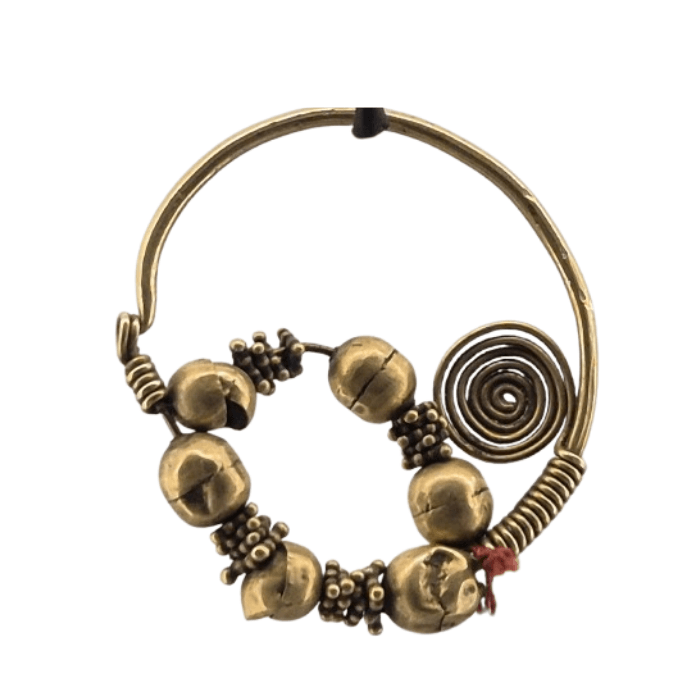
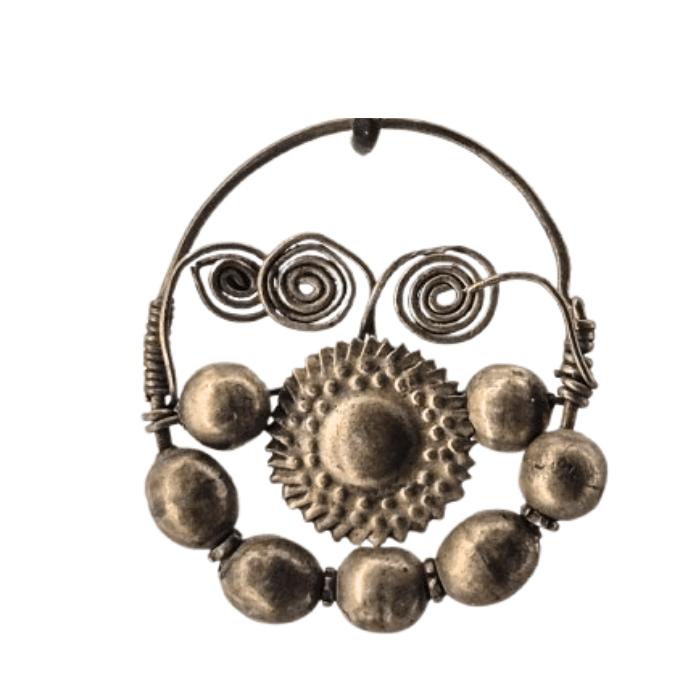
One of the most fascinating aspects of Uzbek jewelry lies in its forms. Each curve, each symbol carries meaning. Artisans did not simply decorate for beauty’s sake; they spoke in a language of shapes and patterns that reached deep into ancient belief.
Circular designs were among the most common. The circle represented the sun, the source of light and life. It symbolized completeness and eternity, a reminder that all things return to their origin. Women often wore circular pendants or earrings to attract harmony and energy.
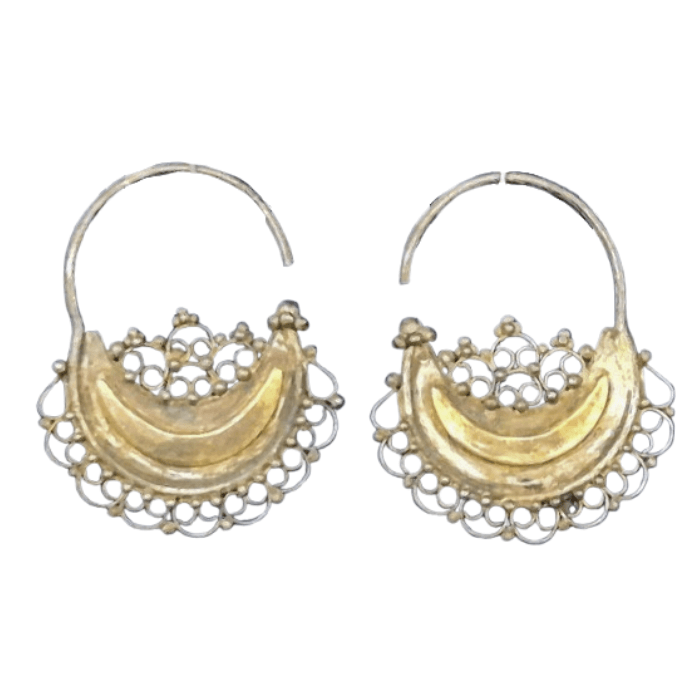
The crescent moon was another beloved motif, especially in forehead and temple ornaments. The moon, with its constant renewal, symbolized fertility and the cycles of life. It was closely connected to femininity, guiding and protecting women through transitions from girlhood to motherhood.
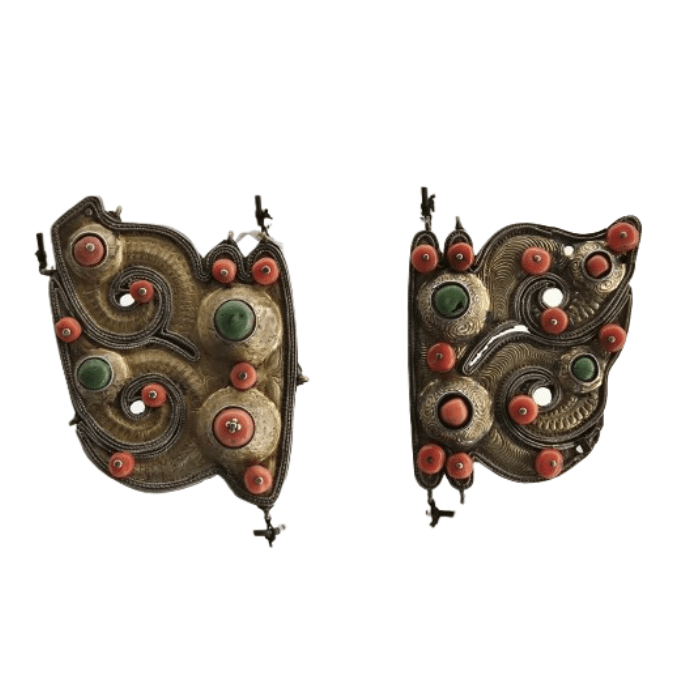
Floral and botanical designs also played a significant role in Uzbek jewelry. Flowers stood for beauty and growth, while vines and leaves symbolized vitality and connection to the earth. These motifs were often paired with gemstones, as if the colors of nature were captured in metal.
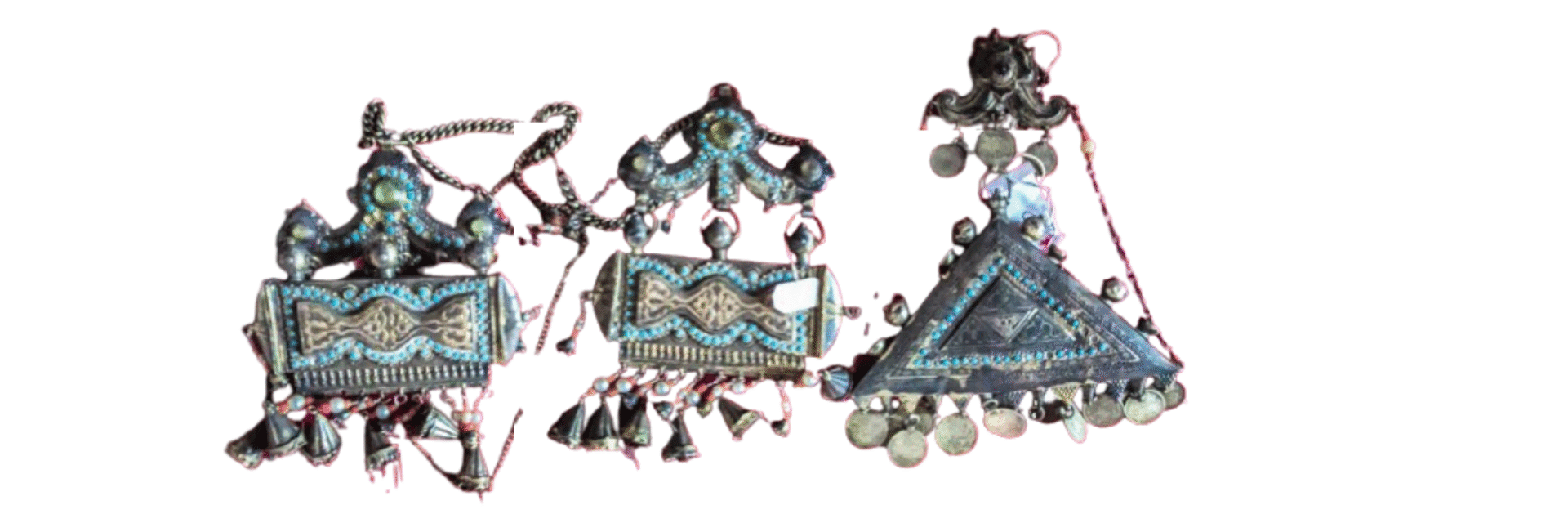
Geometric patterns were not only aesthetic but also spiritual. Triangles represented the connection between heaven, earth, and humanity. Diamonds signified protection and stability, while zigzag lines acted as a kind of invisible fence, guarding the wearer from evil spirits. Every shape had a voice, every line a story. To look closely at a piece of Uzbek jewelry is to read a silent poem, written in silver.
The Power of Amulets
Perhaps the most enchanting element of Uzbek jewelry is its spiritual dimension. Almost every traditional piece contained an element of protection, an amulet, a talisman, or a sacred symbol meant to shield the wearer from harm.
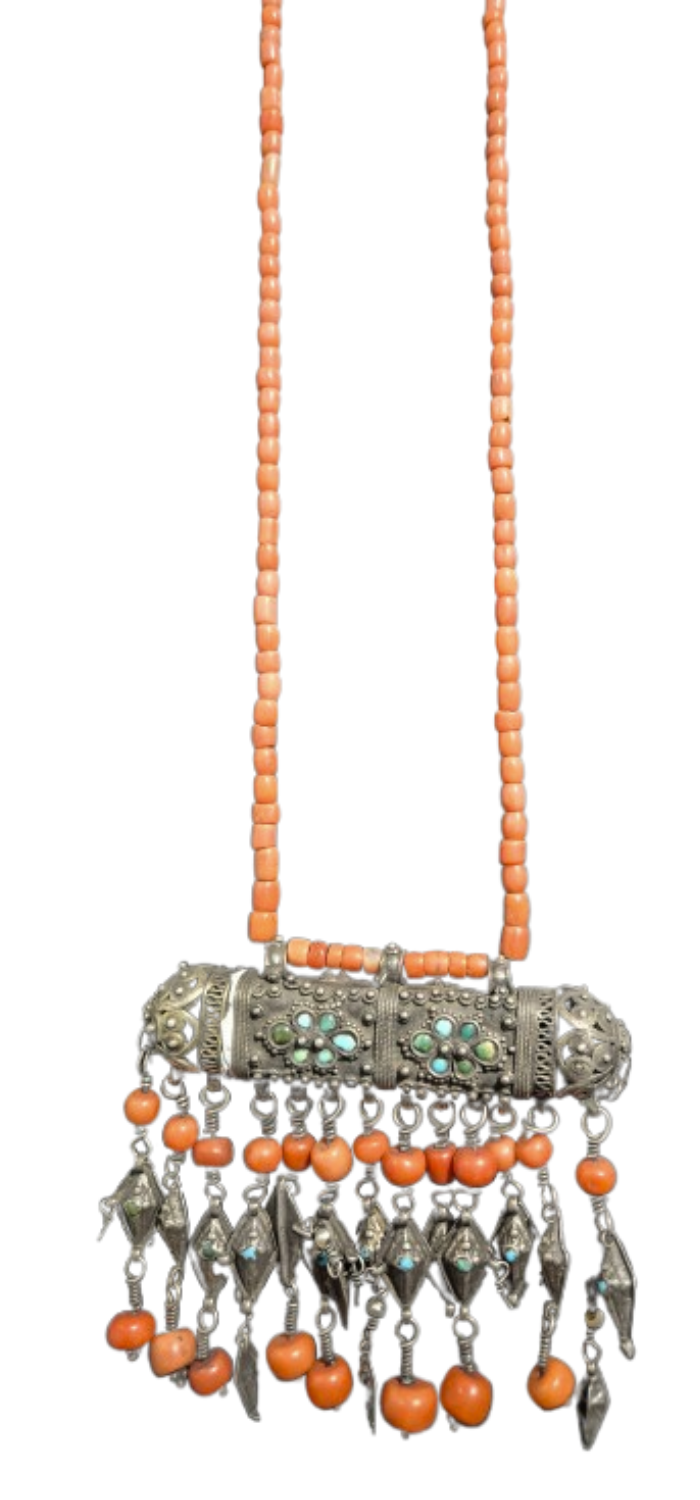
Amulets were not always obvious. Sometimes they took the form of small silver boxes attached to necklaces or belts. These tiny containers, often triangular or cylindrical, were known as “tumors” or “ta’wiz” and were believed to hold great power. Inside, a woman might keep a snippet of hair, a fragment of cloth, a pinch of salt, or a piece of paper inscribed with a prayer. The contents varied, but the purpose was always the same: to attract good fortune and deflect negativity.
The materials themselves also carried significance. Silver was considered the most sacred of metals. It was believed to purify, heal, and reflect harmful energy away from the body. Gold, while valued for its beauty, was less commonly used in traditional Uzbek jewelry because silver was thought to have stronger protective powers.
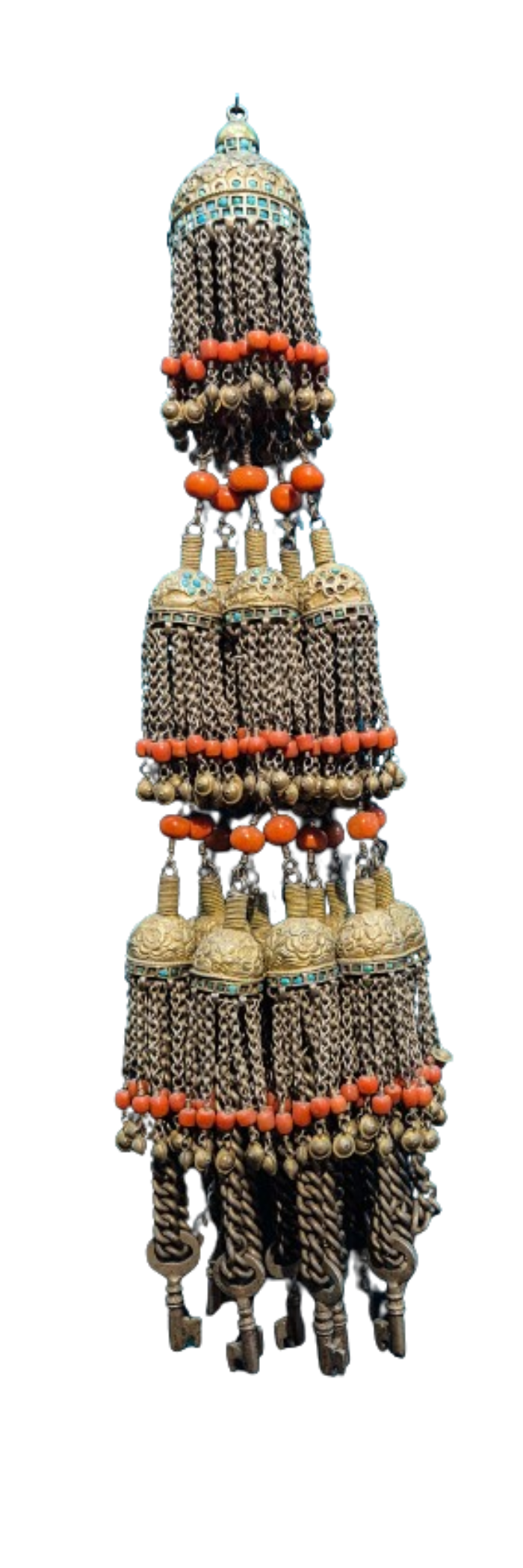
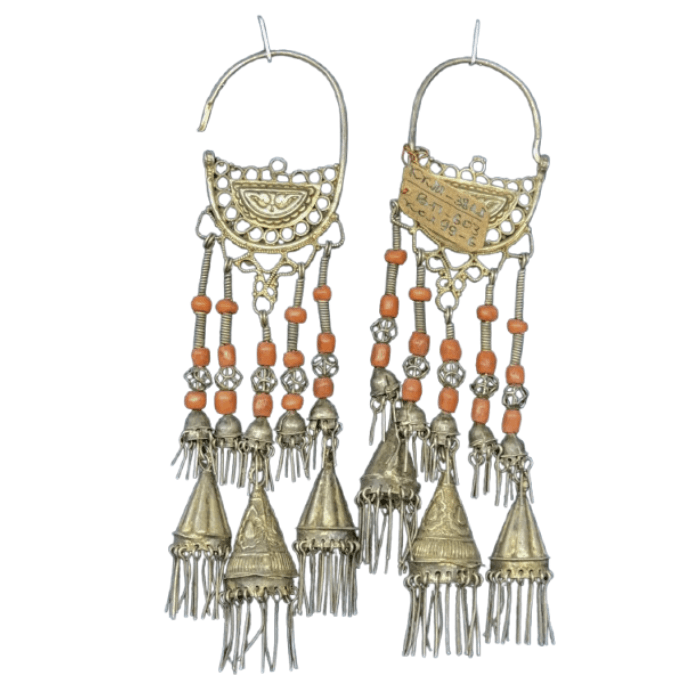
Gemstones were chosen with equal care. Turquoise was a favorite, representing peace and protection. People believed it could absorb negative energy and change color if danger was near. Coral was another beloved stone, symbolizing life and vitality. Carnelian, with its deep red glow, was associated with courage and spiritual strength. Lapis lazuli, with its heavenly blue, connected the wearer to wisdom and divine truth.
Each stone, each piece of metal, and each amulet worked together to create not only a beautiful object but also a spiritual shield. To wear Uzbek jewelry was to wrap oneself in faith and ancestral memory.
The Art of the Craftsmen
Behind every piece of Uzbek jewelry stands the hand of a master craftsman. These artisans were more than goldsmiths; they were storytellers in metal. Skills were passed down from father to son, sometimes through many generations, in small workshops hidden in the narrow streets of old towns.
Inside these workshops, time seemed to move differently. The rhythmic tapping of a hammer, the hiss of molten metal, and the soft hum of concentration filled the air. Craftsmen worked entirely by hand, without modern tools. They knew how to read the metal, how to coax beauty from it through patience and precision.
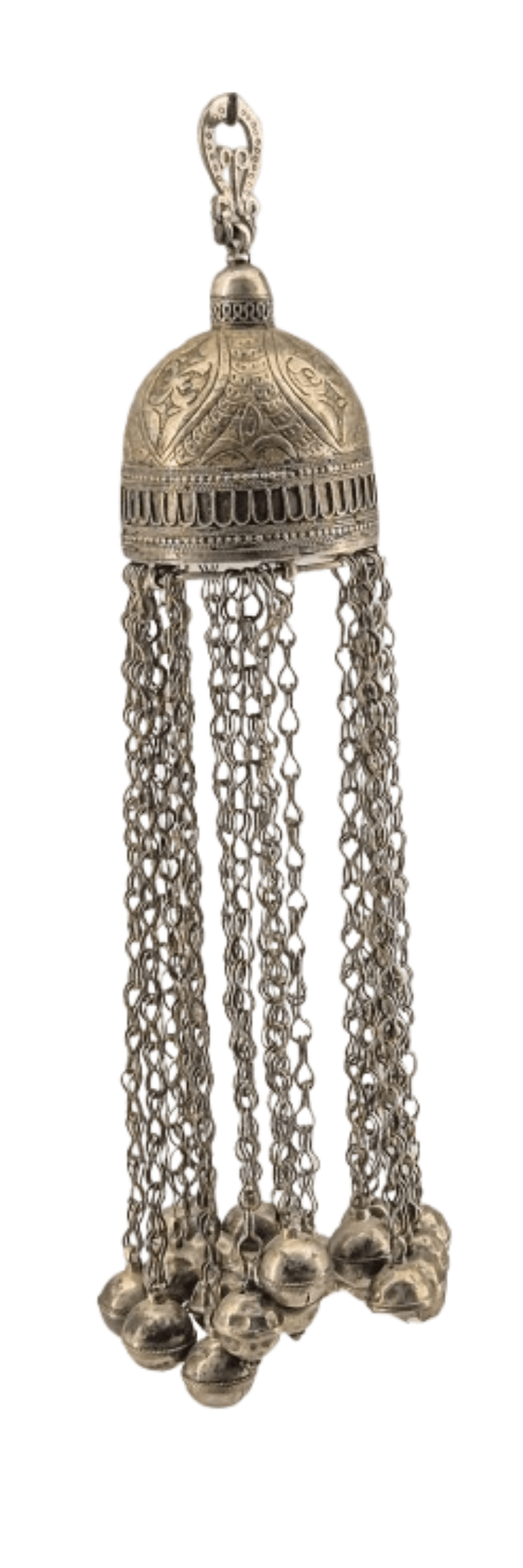
One of the most admired techniques was filigree, a delicate art of twisting fine silver wire into lace-like patterns. Another was granulation, where tiny beads of silver were fused onto the surface to create intricate textures. Enamelwork added vibrant color, while stone setting gave each piece its final spark.
Even the parts no one would ever see, the backs of pendants or the undersides of clasps, were finished with care. For the craftsman, perfection was a matter of respect: for the material, for the wearer, and for the tradition itself.
To this day, in the bazaars of Bukhara and Samarkand, you can still hear the faint echo of hammer on silver. Some families continue the craft exactly as their ancestors did, while younger artists bring new energy by blending traditional motifs with contemporary design. Uzbek jewelry remains alive, evolving yet true to its roots.
A Reflection of Identity
Throughout history, Uzbek jewelry has been more than decoration. It has been a declaration of identity, a visible link between the individual and the community. It told others who you were, your origin, your family’s status, and your role in society.
In many ways, jewelry acted as a woman’s biography. The types of earrings she wore, the patterns on her bracelets, or the number of pendants on her necklace could all reveal where she came from and whether she was married or single. For a newlywed, her jewelry was an open announcement of her new life.
But beyond social meaning, jewelry also carried emotional weight. It was a way to remember, to hold on to love, faith, and continuity. Even after death, women were sometimes buried with their jewelry, so they could carry their protection and beauty into the next world.
Today, when modern women in Uzbekistan wear traditional jewelry, they are not only embracing fashion. They are wearing history, carrying forward a legacy that has survived empires, invasions, and the passing of centuries.
The Living Tradition
The beauty of Uzbek jewelry lies in its timelessness. While styles have changed and modern life has brought new materials and tools, the spirit of the craft remains. Whether made in a small village workshop or a modern studio in Tashkent, every piece still holds a trace of the old beliefs — that jewelry can protect, empower, and tell a story.
Contemporary designers often draw inspiration from classic motifs, reinterpreting them for today’s audience. They mix ancient shapes with minimalist forms, pair silver with new stones, or experiment with scale and texture. Yet even in these modern creations, one can still see echoes of the old world: the crescent moon, the circle of the sun, the delicate filigree that catches the light.
Travelers who visit Uzbekistan often fall under the spell of these pieces. In the markets of Bukhara, amid the scent of spices and the sound of craftsmen at work, rows of silver jewelry glimmer in the sunlight. Each pendant or earring feels like it carries a whisper from the past — a story waiting to be retold.
The Spirit Behind the Shine
What makes Uzbek jewelry so captivating is not only its craftsmanship or beauty but the soul it carries. These ornaments are expressions of faith, identity, and resilience. They tell the story of women who wore them with pride, of families who passed them down through generations, and of artisans who dedicated their lives to keeping this heritage alive.
Every piece of Uzbek jewelry is a bridge between the material and the spiritual, between history and the present moment. To wear it is to wear centuries of memory and meaning. It reminds us that true adornment is never just about decoration. It is about connection — to culture, to belief, and to the enduring human desire to find beauty and protection in the world around us.
In the glow of silver and the shimmer of turquoise, you can still feel the heartbeat of the Silk Road. You can sense the voices of craftsmen and the laughter of brides, the prayers whispered into tiny amulet boxes, and the timeless truth that beauty and belief are inseparable.
That is the magic of Uzbek jewelry, a living legacy of art, faith, and humanity, shining brighter with every generation that wears it.
Whether you’re a fan of traditional jewelry or prefer modern designs, the most important thing is that what you wear truly suits you. The right jewelry doesn’t just make you look more beautiful; it also gives you that little boost of confidence.
FlorenceJewelshop has created a free PDF guide filled with practical tips to help you choose the perfect jewelry for your body shape, style, and personality.
Interested? Just fill in the form, and I’ll send the free PDF to you as soon as possible!

"*" indicates required fields
Florence from FlorenceJewelshop