
 NL
NL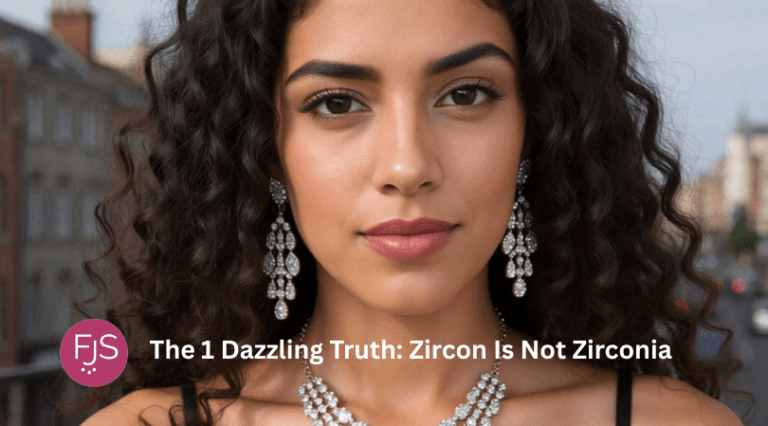
Zircon is not Zirconia, and yet these two gemstones are mixed up all the time. In this blog, we explore the fascinating world of zircon, the birthstone of December, together with turquoise and tanzanite. These three gemstones could not be more different, but zircon stands out because of its history, beauty, and optical brilliance.
Many people confuse it with zirconia, but they are not the same at all. Zirconia is manmade, while this ancient mineral is one of the oldest natural substances on earth. Let us dive into what makes it such an extraordinary gem, from its appearance and origins to its role in history and jewelry.

What does it look like?
This transparent gemstone often shows warm, glowing colors. It can be colorless, golden yellow, honey brown, red, or even green. The most famous hues include champagne, cognac, and coffee tones, which give the stone an elegant vintage look. When cut and polished, it displays a dazzling brilliance that closely resembles that of a diamond.
Because of this sparkle, it is sometimes called the poor man’s diamond. Blue tones are another beloved variety, especially popular in antique jewelry. These shades are created by heating colorless crystals to around one thousand degrees for several hours, transforming them into breathtaking blues and greens.
This gem has a fascinating optical quality called double refraction. When light passes through it, the beam splits into two, creating a doubling effect of its facets. When you look closely, you may notice the facets appear to shimmer twice, adding depth, fire, and a mosaic-like sparkle. This feature gives the stone a unique visual texture that even diamonds do not possess. Each cut piece reveals a tiny universe of light reflections that make this mineral truly hypnotic to observe.
Zircon is not Zirconia.
Although their names sound alike and both contain zirconium, these two materials are entirely different. Zircon forms naturally deep within the earth, while zirconia, or cubic zirconia, is a synthetic crystal created in a laboratory. Zirconia was first produced in the 1930s when scientists in Moscow succeeded in growing clear crystals that looked like diamonds. Because of its hardness, brilliance, and affordability, it became a popular diamond substitute, especially in the fashion jewelry industry.
On the Mohs scale of hardness, zircon scores around 7.5, while zirconia reaches 8.5, and diamond tops the scale at 10. The natural gem is more fragile and can break when being polished, which makes cutting it a challenge even for skilled artisans. Zirconia, on the other hand, is easier to work with and can be made in any color and shape. It is much less expensive than both natural zircon and diamond, making it accessible for those who love sparkle without the price tag. Still, no lab-grown material can fully imitate the warmth and depth of a natural gemstone that has existed for billions of years.


A long history
Zircon is the oldest known mineral on Earth, dating back over 4.4 billion years. Tiny crystals have been discovered in the rocks of Western Australia, surviving unimaginable geological events such as volcanic eruptions and continental shifts. These minuscule grains contain traces of uranium, which slowly turn into lead over time. By measuring these elements, scientists can determine the exact age of each sample, making them key to understanding the early history of our planet.
Crystals of this type are found in sedimentary deposits, metamorphic rocks, and ancient magma. Despite their small size, they are incredibly durable and have endured billions of years of erosion, pressure changes, and earthquakes. This resilience makes them not just gemstones but also scientific treasures. Because of their slight radioactivity, their internal structure changes slowly over time, adding another layer of intrigue to their story.
Some of the oldest known jewelry pieces contained this gem, found in ancient graves and archaeological sites. It also appears in historical texts and legends, such as the Hindu story of the Kalpa Tree, which is said to have leaves made of the stone. In the Bible, the high priest Aaron wore a breastplate adorned with twelve gemstones, one of which is believed to have been zircon. Even the name of an angel in Paradise, according to some old writings, was Zircon.
And more history…
Throughout history, this gemstone has been admired for its supposed protective and spiritual powers. During the Middle Ages, people believed it could promote good sleep, bring wealth, and ward off evil spirits. Many travelers carried it as a talisman for safety and wisdom. In the Victorian era, blue varieties became particularly fashionable. They were used in elegant estate jewelry and mourning pieces, often set in gold and surrounded by seed pearls. Queen Victoria herself was known for her love of sentimental and mourning jewelry, and this gem often featured in those emotional pieces.
The discovery of heat treatment in the early 20th century gave the stone a new life. By heating pale stones, gem cutters could produce the striking blue color that remains so desirable today. The famous gemologist George Kunz, who worked for Tiffany and Company, admired this mineral deeply. He even tried to rebrand it as Starlite to highlight its brilliance and promote it to a wider audience. Although the name did not catch on, his appreciation helped bring attention to this underappreciated gemstone.
Nice to know
The word zircon comes from the Arabic zarkun, meaning red, or from the Persian zargun, meaning golden. This perfectly describes its range of warm hues. Deposits can be found in many countries, including Cambodia, Sri Lanka, Tanzania, Nigeria, Myanmar, and Australia. Cambodian stones, especially from the Ratanakiri region, are considered among the finest in the world thanks to their vivid blue color and exceptional clarity.
The gem’s slight radioactivity makes it scientifically valuable. Geologists use it to date rocks because they can measure the conversion of uranium to lead within the crystal. The oldest known specimens come from Western Australia and are about 4.4 billion years old. Even though the mineral occurs in almost every part of the world, it is often microscopic in size, ranging from one to three micrometers. Occasionally, larger crystals form and can be cut into gemstones. These rare pieces find their way into fine jewelry collections and artisan designs.
Positive feature
Many cultures believe that this gem has powerful metaphysical qualities. It is said to balance the mind and body, strengthen the spirit, and attract prosperity. Some use it during meditation to increase focus and promote vivid dreams or visions. Whether or not you believe in these properties, wearing them can certainly make you feel more grounded and connected to the natural world. Its light reflects a sense of calm and purity, and its sparkle can lift your mood instantly.
The stone’s resilience is not only spiritual but also physical. Because it forms in both igneous and metamorphic rocks, it can withstand extreme conditions. It is resistant to chemical weathering and erosion, allowing it to survive through countless geological cycles. If you look closely under magnification, you can sometimes see rings within the stone that record its growth through time, much like the rings of a tree. These layers tell the story of the Earth written in crystalline form.
Mined in…
Today, most of the world’s zircon comes from Australia, which produces around 37 percent of the global supply. Other important sources include Cambodia, Sri Lanka, Madagascar, Canada, Myanmar, Thailand, and Ukraine. Each region offers slightly different color variations depending on the mineral composition of the local soil and rock. Collectors often seek examples from specific regions because of their unique hues and clarity. Cambodian varieties tend to show rich blues, while Sri Lankan stones often display golden tones.
-
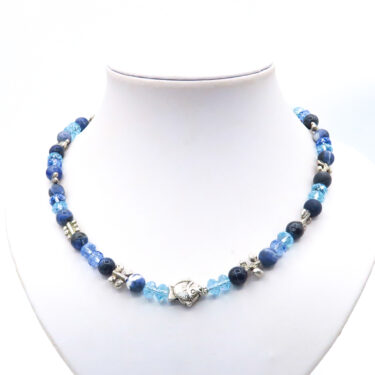
 blue quartz necklace€ 90.00

How to take care of this beauty:
This gemstone is durable but still requires gentle care. Avoid exposing it to intense sunlight for long periods, as some treated stones may lose their enhanced color and revert to their natural shade. For the same reason, it is not recommended to wear jewelry containing this gem to tanning or nail salons where strong UV and white light are used. Clean it with mild soapy water and a soft brush, and store it separately from harder gemstones to prevent scratching.
Because the stone can break during cutting, gemstone cutters must handle it with extreme care. Once safely set into a piece of jewelry, however, it is perfectly strong for everyday wear. Small beads of this material are sometimes used in handcrafted designs such as those by FlorenceJewelshop, adding subtle sparkle and elegance to each piece. Just avoid dropping or stepping on your jewelry, as even this resilient gem has its limits.
If you are passionate about gemstones and love to learn their stories, you will enjoy our free PDF filled with fascinating facts about birthstones, including zircon. It is a perfect guide to discover your own birthstone or to find a meaningful gift for someone special. If you would like your copy, simply reach out and let us know where to send it.
Zircon may not be as famous as diamond or ruby, but it holds an ancient magic all its own. Its shimmer is not just light—it is history captured in crystal form. When you wear zircon, you carry a piece of the earth’s memory, glowing softly with the story of time itself.
If you love gemstones and gemstone jewelry, you will love this PDF full of stories and information about birthstones. Great to see what your birthstone is, but also perfect when you want a personal gift for your friend. Ask for this PDF. It’s free! Just let me know to whom I can send your copy.

"*" indicates required fields
Florence from FlorenceJewelshop