
 NL
NL
You can never say enough about the beauty of pearls. A pearl necklace is one of the purest gifts of nature, shaped slowly and patiently by water, time, and living organisms. Pearls are not created in haste, and perhaps that is exactly why they have fascinated people for thousands of years. They represent elegance, femininity, power, and emotion, and they deserve to be cherished.
At the same time, pearls remind us of how fragile nature is. Clean water is essential for pearls to grow. Without it, oysters and mussels simply cannot survive. Pollution, plastic waste, and industrial discharge threaten pearl-producing waters all over the world. If we do not protect these environments, we risk losing pearls forever. A painful example is the original Biwa pearl from Japan, which has almost disappeared due to severe pollution of Lake Biwa.
FlorenceJewelshop has previously written blogs about freshwater pearls, saltwater pearls, and cultured pearls. Those blogs explain the differences between pearl types and how they are formed. In this blog, we go a step further. Here, you will find practical knowledge, traditions, personal experience,s and advice that every pearl lover should know.
In this blog, we will discuss:
- Whether or not to knot a pearl necklace
- How to care for your pearl necklace
- Wearing a pearl necklace on your wedding day
- Ohrid pearls and their unique craftsmanship
- Why now is the time to buy a pearl necklace
Knotting your pearl necklace: yes or no?
One of the most frequently asked questions in the world of pearls is whether a pearl necklace should be knotted or not. Opinions differ, traditions are strong, and modern alternatives have changed the conversation.
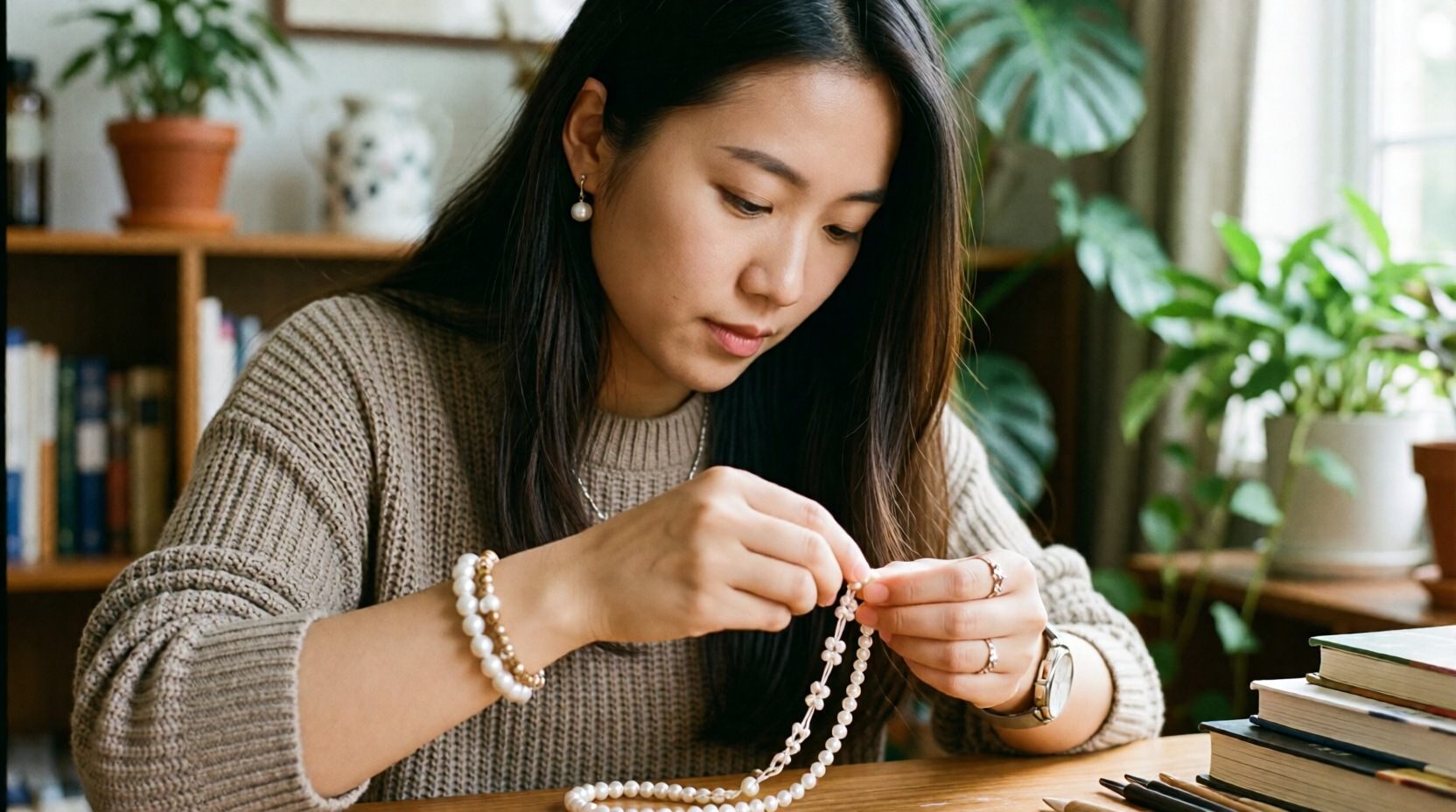
When I was a young girl, I helped my father in his jewelry shop. One of my tasks was picking up pearls from broken necklaces. These were not cheap imitation pearls, but high-quality natural pearls. When a string broke, the pearls rolled everywhere. Under cabinets, behind showcases, into corners only small fingers could reach. It often took a long time to find them all. Some were lost forever.
If you had asked me at that time whether knotting a pearl necklace was a good idea, my answer would have been immediate and loud: yes, absolutely.
My grandmother always said pearls should be knotted. No discussion. She came from a long line of jewelers and trusted traditional craftsmanship. In her world, knotting pearls was simply the right thing to do. And she was not wrong.
However, history shows exceptions. There are vintage Mikimoto pearl necklaces that were never knotted and are still in perfect condition today. This raises an interesting question. Is knotting tradition, necessity, or habit?
Why knot a pearl necklace?
Traditionally, jewelers knotted pearl necklaces for two main reasons. The first reason was safety. When a knotted string breaks, only one or two pearls fall off instead of the entire necklace. This significantly reduces the risk of losing expensive pearls.
The second reason is protection. Pearls are organic and relatively soft. Their surface is made of nacre, which can wear down when pearls rub against each other constantly. Knots act as tiny buffers between the pearls and prevent direct contact. This helps preserve the luster and surface quality of the pearls over time.
Disadvantages of knotting
Despite these advantages, knotting also has downsides. Pearls are traditionally strung on silk thread. Silk stretches over time, usually within four to five years. As the thread stretches, it becomes thinner and weaker. Eventually, the pearl necklace needs to be restrung.
Jewelers often charge per knot, which makes professional restringing expensive. A long pearl necklace with many small pearls can be costly to maintain. When the silk thread starts to darken or when you notice space between the knot and the pearl, it is time to take action.
Another disadvantage is aesthetic. With small pearls, the knots can appear larger than the pearls themselves. Knot sizes are not always identical, which can disrupt the visual harmony of the necklace. In some cases, the necklace can resemble a rosary rather than fine jewelry.
Modern alternatives
The idea that knots are the only way to protect pearls is outdated. Today, strong synthetic threads combined with tiny rubber spacers are available. These spacers keep pearls apart without the need for knots. The result is a pearl necklace that falls more smoothly around the neck and requires less frequent maintenance.
Personally, I prefer an unknotted pearl necklace. I love how it drapes naturally and elegantly. I use strong thread and add spacers only when necessary. This choice is based on aesthetics, comfort, and modern durability.
When should you knot pearls?
There is no universal rule. Style, preference, and usage all matter. However, some guidelines can help.
Large natural pearls over one centimeter are heavy and valuable. When strung on silk, knotting or using spacers on strong thread is recommended.
Long pearl necklaces should be knotted or reinforced. They are heavier and often worn wrapped multiple times, which creates tension on the string.
Multistrand pearl necklaces should not be knotted. Achieving perfectly aligned strands is nearly impossible when knots are involved, as every knot differs slightly in size and spacing.
How to care for your pearl necklace
A pearl necklace needs proper care to maintain its beauty. Pearls are organic and sensitive, but caring for them is easier than many people think.
One of the best things you can do for your pearl necklace is to wear it regularly. Pearls benefit from natural skin oils, which help maintain their luster. Pearls that are stored for years without being worn may dry out and lose their shine.
After wearing your pearl necklace, gently wipe it with a soft cloth. A slightly damp cloth is sufficient. Never use harsh chemicals, ultrasonic cleaners, or abrasive materials.
Avoid contact with perfume, makeup, hairspray, and creams. Always apply cosmetics first and put your pearl necklace on last. When removing jewelry, take pearls off first.
Store your pearl necklace separately from other jewelry. Pearls can be scratched easily by harder gemstones or metals. A soft fabric pouch or a jewelry box with individual compartments is ideal. Never store pearls in airtight containers, as they need a small amount of moisture.
Avoid wearing pearls while swimming, showering, or visiting a sauna. Chlorine, salt water, and excessive heat damage nacre.
Have your pearl necklace checked yearly by a jeweler. Restring when necessary to avoid breakage.

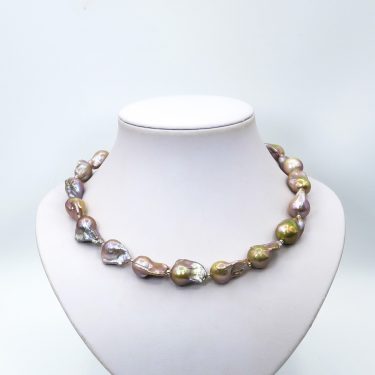
gold baroque pearl necklace
€ 272.00
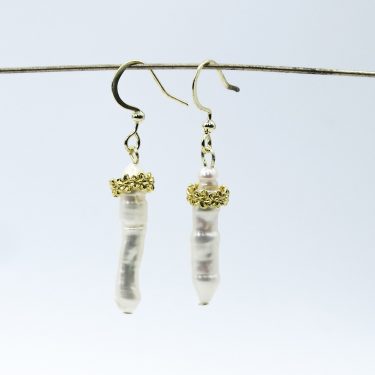
long pearl gold earrings
€ 44.00
Wearing a pearl necklace on your wedding day
Pearls have long been associated with weddings. They are sometimes called wedding tears, a name that has led to mixed beliefs across cultures.
In some traditions, wearing a pearl necklace on your wedding day brings luck, protection, and happiness. In others, pearls are associated with tears and sorrow. Fortunately, the positive symbolism outweighs the negative.
In Greek mythology, pearls were believed to be the tears of joy shed by Aphrodite, the goddess of love. They symbolized purity, love, health, and wealth, all elements of a strong marriage.
In China, pearls were associated with dragons and wisdom. In India, pearls were believed to come from clouds, symbolizing a life without problems. In medieval Europe, soldiers carried pearls for protection and good fortune.
Pearls also fit beautifully into the tradition of something old, something new, something borrowed, and something blue. A pearl necklace passed down from a mother or grandmother carries emotional value and history.
Two strong reasons to wear a pearl necklace on your wedding day are simple. No two natural pearls are alike, just as no two brides are alike. And the soft glow of pearls complements a wedding gown perfectly without overpowering it.
Ohrid pearls and unique pearl necklaces
In Ohrid, North Macedonia, I discovered a true pearl paradise. Ohrid pearls are not typical freshwater pearls and are not grown inside oysters.
They are handmade using a bead made from shell sourced from the Indian Ocean. This bead is coated multiple times with a special emulsion made from the scales of the Plashica fish, which lives in Lake Ohrid. The fish does not grow longer than fifteen centimeters, but its scales create an extraordinary shimmer.
Each layer of coating dries before the next is applied. This process is repeated five to seven times, resulting in the deep, luminous shine that Ohrid pearls are known for. Every Ohrid pearl necklace is handmade and unique, with no two pieces exactly alike.
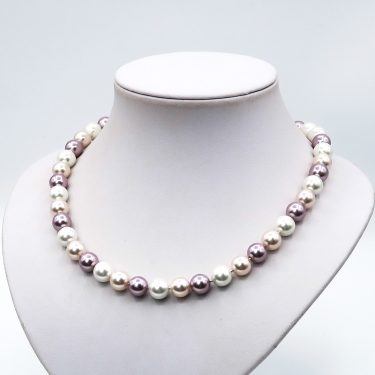
light pink Ohrid pearl necklace
€ 80.00
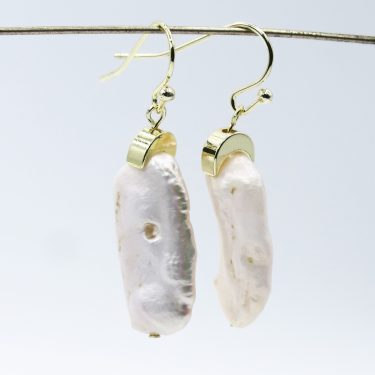
gold Biwa pearl earrings
€ 49.00
Why now is the time to buy a pearl necklace
After diamonds, pearls are often called a woman’s best friend. A pearl necklace suits every age, style, and occasion. There is a pearl necklace for every budget, but high-quality natural pearls are becoming increasingly rare.
Until the early twentieth century, pearl diving was dangerous and inefficient. Divers reached depths of thirty-five meters with limited equipment and found only a few usable pearls among thousands of oysters.
Today, natural pearls are found mainly in Bahrain and Australia. They are extremely rare and expensive. Pollution, plastic waste, and industrial discharge continue to destroy pearl-producing environments worldwide. Lake Biwa in Japan is a painful example, where pearl harvesting has nearly disappeared.
The value of a pearl necklace is determined by seven factors: luster, size, shape, surface quality, color, origin and type. South Sea pearls are the most valuable, followed by Tahiti and Akoya pearls. Freshwater pearls remain the most accessible option.
A high-quality pearl necklace can last between sixty and one hundred years when cared for properly. Antique pearl jewelry is, therefore, not only beautiful but also valuable.
Who should own pearls?
Every woman between eighteen and one hundred eighteen should own pearls. Pearls are timeless, elegant, and versatile. Brides included. The idea that pearls bring tears is nothing more than a story.
When choosing a pearl necklace, consider your body type and proportions. Taller or broader women may prefer larger pearls or longer strands, while smaller women often look best in delicate, shorter necklaces.
Pearls are delicate. Put them on last, take them off first, and store them with care. Treat them gently, and they will reward you with a lifetime of beauty.
Conclusion
Pearls are more than just jewelry. A pearl necklace tells a story of nature, tradition, craftsmanship, and emotion. Whether you choose a knotted or unknotted pearl necklace, wear it on your wedding day, or invest in a rare and unique type such as the Ohrid pearl, one thing is clear: pearls deserve respect and care. By choosing quality and maintaining your pearl necklace properly, it can remain beautiful for generations. In a world where natural pearls are becoming increasingly rare, owning and wearing a pearl necklace is not only a style choice but also an appreciation of something precious, timeless, and fragile.
Logically, a pearl is called a gem or even a gemstone. They are so ingeniously formed by such ‘clever’ animals, who give us such beautiful pieces of nature to make the most beautiful jewelry. For every budget and taste, there is a pearl. FlorenceJewelshop has made handmade, unique (no duplicates), and exclusive necklaces, earrings, and bracelets made of pearls. Just have a look.
I wrote a great and free e-book about pearls. You will find a lot of information there. It’s free, and just let me know where I can send it to.

"*" indicates required fields
Florence from FlorenceJewelshop