
 NL
NL
You might wonder what on earth Florence from FlorenceJewelshop wants you to do now. Compose your own jewelry set or even your own parure? What exactly is a parure, and what do I mean when I say jewelry set? Don’t worry, I’ll get to that. Sometimes history gives us the most wonderful ideas for making ourselves look and feel more beautiful. One of those ideas is the parure — a coordinated jewelry set designed to dazzle. OK, maybe we don’t need to go as far as the queens and empresses of old who owned entire vaults of them, so let’s start with something more down-to-earth: the demi-parure.


What Is a Parure?
The word parure comes from French and means “to adorn” or “to decorate.” In this post, I’m not talking about the Guerlain lipstick line called Parure; I’m talking about the real thing: the classic jewelry parure that originated in France centuries ago.
A parure is a complete jewelry set made to be worn together. Traditionally, a parure would include a necklace, a brooch, earrings, and one or more bracelets. The most luxurious versions, known as grande parures, might even add a tiara, a diadem, rings, and sometimes a belt buckle, yes, you read that right, a jeweled belt buckle!
What makes a jewelry set a parure is the harmony between the pieces. Each piece shares the same design, gemstones, and metals, creating a cohesive, elegant look. The beauty of a parure lies in its unity; every piece speaks the same design language, making the wearer look impeccably put together.
Where does the idea of a parure come from?
The concept of a jewelry parure first appeared in 17th-century Europe. At that time, high-society ladies were constantly looking for ways to show their wealth, taste, and social standing. What better way to do that than by wearing a coordinated jewelry set sparkling with diamonds, pearls, and gold?
Because a parure usually included several large, precious pieces, it was incredibly expensive, even by the standards of the day. Owning a parure wasn’t just about beauty; it was a status symbol, a way of saying, “I belong to the elite.”
The French Parure: Fit for a King
Let’s start in France, where the parure truly became an art form. Louis XIV, famously known as the Sun King, was obsessed with grandeur. He believed that surrounding himself with art, gold, and beauty would secure his power (which, unfortunately, didn’t quite go as planned).
To express his royal splendor, Louis XIV commissioned his top jeweler to create a parure for his bride, Madame Françoise d’Aubigné. The jewelry set included a necklace, earrings, two pendants, sleeve buckles, a bowknot, and no fewer than 32 diamond buttons, all made of diamonds set in silver. Diamonds and silver were a very fashionable combination at the time, as the cool tones of silver made diamonds appear even brighter.
A century later, Napoleon Bonaparte continued the tradition. Never one to be outshone, he gifted parures to his wives — and, quite possibly, to his mistresses as well. His most famous gift was a parure for Joséphine de Beauharnais, centered around delicate cameos. That historic parure now belongs to the Queen of Sweden, still admired for its beauty and craftsmanship.
The Dutch jewelry set or parure
Fast forward to more recent history, and even modern royalty keeps the parure tradition alive. In 2018, royal watchers in the Netherlands were buzzing with excitement: would Queen Máxima wear her legendary parure featuring the Stuart Diamond during her visit to Queen Elizabeth II in England?
She did, and she looked absolutely stunning. The Stuart parure is one of the most impressive in Europe, and like many royal jewelry sets, it has been passed down through generations. Almost every European and Russian royal family owns at least one parure, often reserved for grand state occasions or royal weddings. What’s remarkable is how these parures never go out of style. Even though they were designed centuries ago, their timeless elegance continues to inspire modern jewelry designers, myself included.


How to Transform a Parure
Now, even royal ladies don’t want to wear the same jewelry set over and over again. But when your parure is made of diamonds, emeralds, and gold, you can’t just tuck it away and buy something new. The solution? Adaptability.
Jewelry designers of the past were incredibly clever. They designed parures that could be taken apart or rearranged. A tiara might have a removable centerpiece that could be worn as a brooch. Smaller sections of that same tiara could double as earrings. Necklaces often had detachable pendants that could be turned into hair ornaments or bracelets.
These modular designs were ahead of their time. Clasps, hinges, and fittings were engineered so skillfully that one piece could become several different ones. It was like having a jewelry wardrobe in one parure. And when fashion trends changed — as they always do — jewelers could adapt the set to match the latest styles without remaking it from scratch.
That flexibility made parures not just beautiful but also practical. They were wearable art with built-in versatility — something we can all appreciate today.
Demi-Parure: The Half Jewelry Set
Of course, not everyone could afford the full royal treatment. That’s where the demi-parure, or “half jewelry set,” came in.
A demi-parure usually includes two or three matching pieces: for example, a necklace and earrings, or a necklace with a brooch, or a bracelet with matching earrings. Like the full parure, the pieces share the same design, materials, and gemstones.
The demi-parure became especially popular in the 19th and 20th centuries as jewelry became more accessible. It offered elegance and coordination without the extravagance of a full royal set. Today, it remains a favorite choice for women who want to look sophisticated without feeling overdressed.
And let’s be honest, unless you’re attending a coronation or an opera premiere, a demi-parure is probably the more practical option!
-
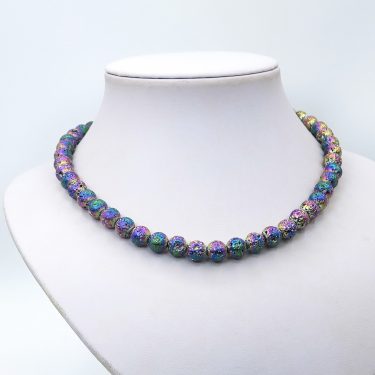
 multicolored lava stone necklace€ 45.00
-
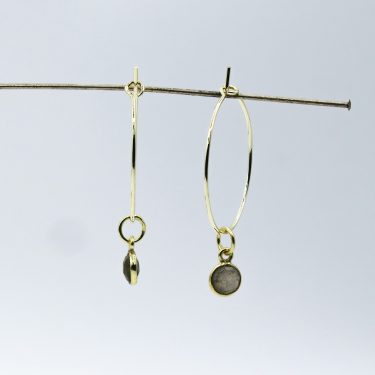
gold labradorite earrings€ 39.00
Choose a Parure or Demi-Parure
So, how can you bring a touch of parure magic into your own jewelry collection?
First, remember my father’s words of wisdom: “Don’t look like a Christmas tree!” The secret to wearing jewelry well is balance. A demi-parure, such as a matching necklace and earrings, or a necklace and bracelet, is often the perfect combination. It’s enough to make a statement without being over the top.
When creating your own parure or demi-parure, here are a few simple tips:
- Stick to one style. Don’t mix vintage and ultra-modern pieces. If you’re wearing a romantic, boho-style necklace, pair it with earrings that share that same mood. Consistency makes your jewelry look intentional.
- Choose matching materials. Silver goes with silver, gold with gold. Mixing metals can be done tastefully, but for a true parure look, keep the metal consistent.
- Coordinate your gemstones. The stones should match in both color and type. If your necklace features amethyst, pair it with earrings that also feature purple amethyst — not green amethyst or citrine. Cohesion keeps your look elegant.
- Avoid color overload. A parure works because of harmony, not chaos. Stick with one gemstone color or a subtle combination, and your jewelry will look polished, not flashy.
When you follow these tips, you’ll create a jewelry set that enhances your outfit rather than competes with it.
Why Parures Still Matter Today
What I love most about the parure is how it connects us to history while still fitting beautifully into modern life. These sets were designed centuries ago, yet their concept, combining harmony, craftsmanship, and personal expression, remains timeless.
In today’s world, we have the freedom to reinterpret the parure. You can design your own jewelry set that reflects your personality, your favorite gemstones, and your story. A handmade demi-parure with gemstones that hold special meaning can be just as significant as any royal diamond tiara.
Wearing a parure (or a modern version of it) adds a touch of thoughtfulness to your look. It says you pay attention to detail, that you love beauty, and that you appreciate craftsmanship. Whether you’re attending a formal dinner, celebrating a milestone, or just adding sparkle to your day, a matching jewelry set makes you feel put together and confident.
A Modern Take on a Historic Tradition
In my own jewelry designs, I often take inspiration from historical parures. I love how these sets tell a story of love, status, beauty, and creativity. Yet I also love reimagining them in a modern way: lighter, more wearable, and more personal.
You don’t need diamonds the size of walnuts to enjoy the magic of a parure. Semi-precious gemstones, recycled silver, and creative combinations can be just as stunning. A turquoise demi-parure can bring out the color of your eyes. A set with moonstone or rose quartz can add a gentle, romantic glow.
The point is to create harmony between the pieces, and between your jewelry and you.
Create Your Own Parure
If all this talk about parures has you inspired, maybe it’s time to design your own. You can start small: choose a necklace you love, then find or commission earrings that echo its design. Or start with a pair of favorite gemstone earrings and create a bracelet to match. Before you know it, you’ll have your own modern demi-parure.
And don’t forget — jewelry is not just decoration. Each piece you wear represents a moment, a memory, or an emotion. When you combine them thoughtfully into a parure, you’re not just coordinating your jewelry; you’re telling your story.
Need Help Choosing?
If you’d like some help picking gemstones or colors that flatter your skin tone and wardrobe, I’ve got something for you: a free gemstone color chart from FlorenceJewelshop. Just let me know where to send it, and I’ll help you find the shades that make your jewelry, and you shine even brighter.
Final Thoughts
Isn’t it amazing that something designed hundreds of years ago can still inspire us today? The parure is more than a set of jewels; it’s a symbol of beauty, craftsmanship, and connection across time.
So, whether you choose a full parure fit for a queen or a simple demi-parure that complements your everyday style, remember: jewelry should make you feel like the best version of yourself. And if history has taught us anything, it’s that a little coordination and a touch of sparkle never go out of style.
And if you need some help choosing the right gemstones/colors that match your outfit, ask for the free gemstone color chart from FlorenceJewelshop. Just let me know where I can send it.

"*" indicates required fields
Florence from FlorenceJewelshop