
 NL
NL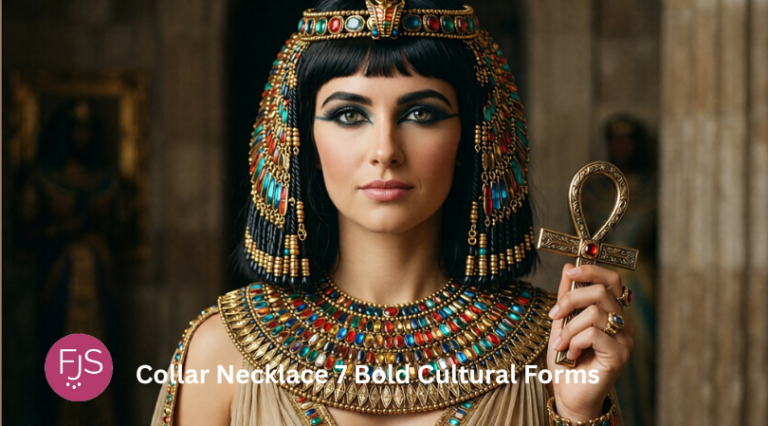
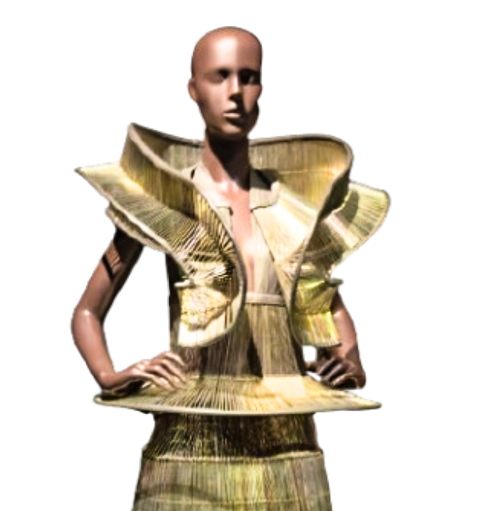
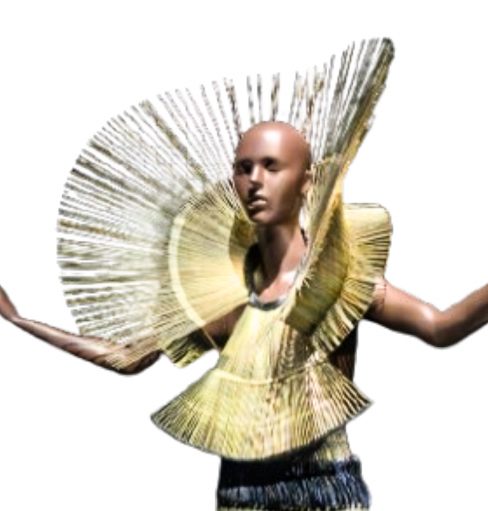
My renewed fascination with the collar necklace began during a visit to the Iris van Herpen exhibition at the Kunsthal in Rotterdam. Walking through the exhibition spaces, I was struck by the sheer presence of the collars in her work. These were not accessories added to complete a garment. They were the garment. The collars rose from the body, surrounded it, and sometimes seemed to extend beyond it, forming structures so complete that no additional jewelry was needed. The collar itself became the jewel.
Seeing these monumental forms up close was both surprising and clarifying. What felt radically contemporary was, at the same time, deeply familiar. The scale, the placement around the neck and shoulders, and the way the body was framed all echoed something ancient. Standing there, surrounded by these designs, it became clear that the collar necklace has always carried more than aesthetic value. It has always been about presence, power, and transformation.
This realization forms the starting point of this text. The collar necklace has appeared again and again across history, cultures, and creative disciplines, never as a neutral ornament but always as a meaningful presence. It sits at the threshold of the body, encircling the neck, framing the collarbones, and drawing the eye to one of the most vulnerable and expressive parts of the human form. To wear a collar necklace is to make a statement, whether intentional or unconscious. It signals status, protection, identity, transformation, or power. This enduring form connects ancient ritual objects with contemporary couture and experimental jewelry design, revealing a surprisingly consistent symbolic language that transcends time and geography.

turquoise collar necklace
€ 80.00


The enduring power of the collar necklace
The collar necklace has appeared again and again across history, cultures, and creative disciplines, never as a neutral ornament but always as a meaningful presence. It sits at the threshold of the body, encircling the neck, framing the collarbones, and drawing the eye to one of the most vulnerable and expressive parts of the human form. To wear a collar necklace is to make a statement, whether intentional or unconscious. It signals status, protection, identity, transformation, or power. This enduring form connects ancient ritual objects with contemporary couture and experimental jewelry design, revealing a surprisingly consistent symbolic language that transcends time and geography.
The human neck is a paradoxical place. It is delicate and exposed, carrying the airway, the voice, and the pulse of life, yet it is also a point of articulation and display. Across cultures, the neck has been marked, adorned, protected, and emphasized precisely because of this dual nature. Anything placed around it becomes charged with meaning. A collar necklace does not simply decorate the body. It frames the self. It defines how a person meets the world and how the world looks back.

The ancient origins of the collar necklace
One of the earliest and most influential appearances of the collar necklace can be found in ancient Egypt. The broad ceremonial collars worn by men and women of status were far more than decorative jewelry. These pieces, often referred to as usekh collars, were composed of multiple rows of beads made from materials chosen for their symbolic properties. Lapis lazuli evoked the heavens, turquoise signaled life and regeneration, carnelian carried associations with blood and vitality, and gold represented divine flesh and eternal existence. Worn high on the chest and spreading across the shoulders, the collar necklace became a microcosm of the universe itself, resting over the heart and lungs as both protection and proclamation.
In Egyptian belief systems, jewelry was active rather than passive. A collar necklace was thought to guard the wearer against harm, to stabilize the vital forces of the body, and to align the individual with cosmic order. This explains why such collars were not only worn during life but also placed on the deceased. They accompanied the soul into the afterlife, ensuring continuity and protection beyond death. The weight and breadth of the collar reinforced its authority. It was impossible to ignore. It announced presence, rank, and connection to the divine.
Closely related yet distinct was the shebyu collar, composed of rows of gold discs and awarded by the pharaoh as a visible mark of honor. This collar necklace functioned as an early form of recognition and reward. To wear it was to be publicly acknowledged. Its meaning was social and political as much as spiritual. In this context, the collar necklace became a tool of power, reinforcing hierarchies and loyalty through a form worn directly on the body.
The collar necklace in prehistoric and early European cultures
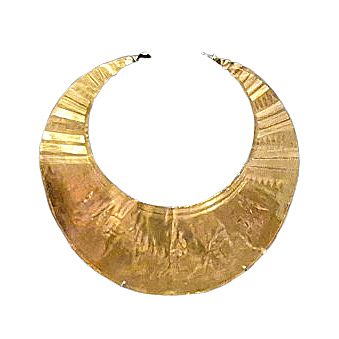
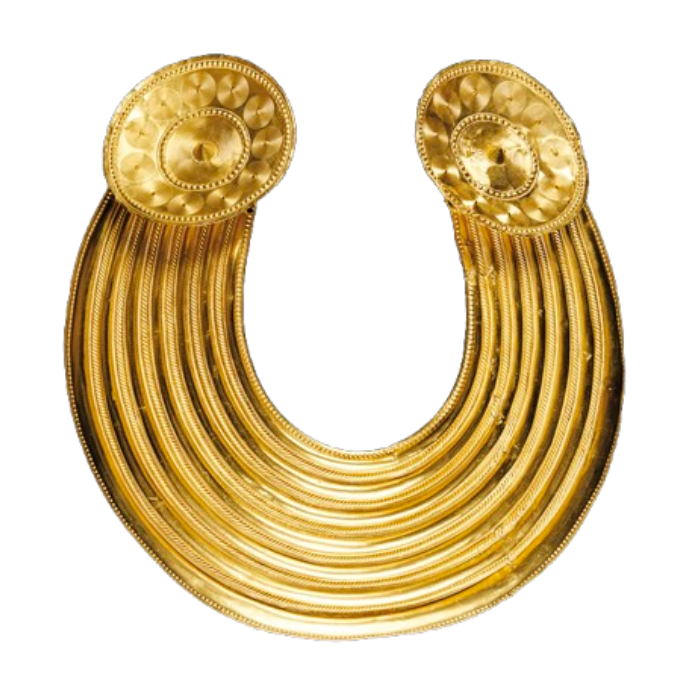
While Egypt provides one of the most iconic examples, it is far from unique. In prehistoric and early European cultures, the collar necklace appeared in the form of the torque, a solid metal ring worn around the neck. Often made from bronze or gold, the torque was rigid, heavy, and open at the front. It did not dangle or sway. It asserted itself. Archaeological evidence and visual depictions suggest that torques were worn by warriors, leaders, and figures associated with divine or heroic qualities.
The torque carried meanings of strength, freedom, and identity. It marked belonging to a group while simultaneously setting the wearer apart. Roman observers initially viewed the torque as a symbol of otherness, associating it with the peoples they sought to conquer. Yet over time, the Romans adopted the torque themselves, awarding it as a military honor. The collar necklace thus shifted from a sign of foreign power to a token of imperial recognition, demonstrating once again how this form adapts while retaining its core symbolic force.

African traditions and the collar necklace as social language
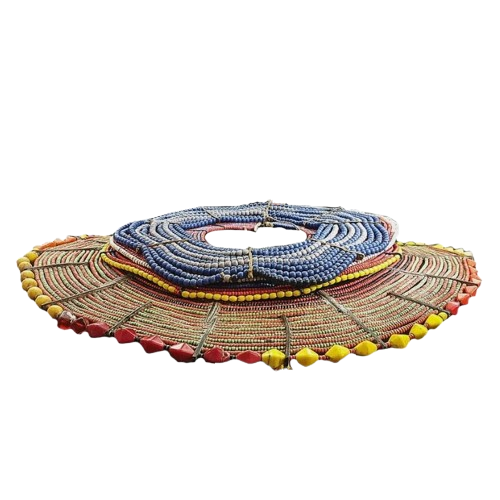
Across the African continent, the collar necklace has long functioned as a form of visual language. Among cultures such as the Maasai and Ndebele, large beaded collars communicate detailed information about the wearer. Color, pattern, scale, and structure indicate age, marital status, social role, and stage of life. These collars are worn during ceremonies, rituals, and moments of transition. They are not individual expressions but collective codes, understood within the community.
In this context, the collar necklace is inseparable from movement, sound, and performance. It participates in dance, ritual, and public gatherings. Its presence marks transformation. A young person becomes an adult. A woman becomes a bride. The collar does not merely signify this change. It helps bring it into being. The act of wearing becomes part of the ritual itself, reinforcing continuity between generations and anchoring identity within the group.
The Chinese cloud collar yunjian
A particularly poetic interpretation of the collar form emerges in China with the development of the cloud collar, known as yunjian. Unlike many metal or bead-based examples, the yunjian was typically made from richly embroidered textile. Shaped like overlapping clouds or flower petals, it draped around the neck and shoulders, creating a soft yet powerful frame for the body. The yunjian was worn during ceremonial occasions, weddings, and formal events, especially during the Ming and Qing dynasties.
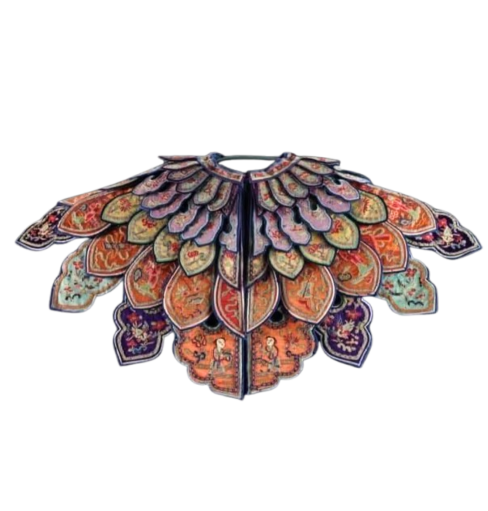
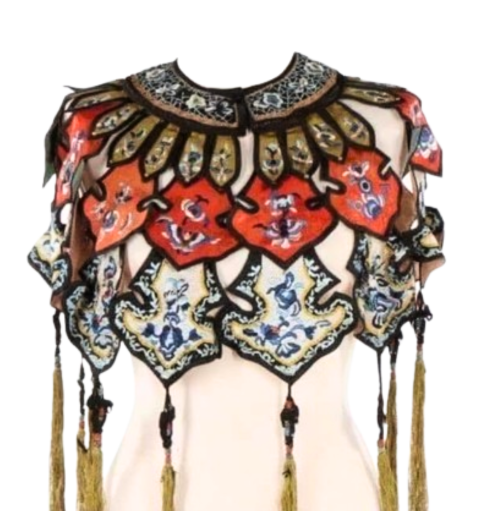
In Chinese cosmology, clouds are not passive background elements. They represent transformation, good fortune, and the movement between heaven and earth. To place cloud forms around the neck is to situate the wearer at the center of cosmic flow. The collar necklace here becomes an energetic threshold. It mediates between realms, linking the physical body with larger universal forces. The symmetry and repetition of the yunjian reinforce ideas of harmony and balance, central values within Chinese philosophy.
Over time, the cloud collar also influenced neighboring regions and later inspired contemporary designers. Its visual language of softness combined with structure continues to resonate in modern fashion and jewelry, particularly in works that explore spirituality, ritual, and the relationship between body and space.
From armor to authority collars in medieval and Renaissance Europe
During the European Middle Ages and Renaissance, the collar did not disappear but shifted form. Metal gorgets became part of armor, protecting the throat in battle while also signaling rank. Later, elaborate textile collars grew in size and rigidity, reaching dramatic proportions in aristocratic dress. These collars framed the face and limited movement, enforcing a posture of control and distance. Authority was literally built into the garment.
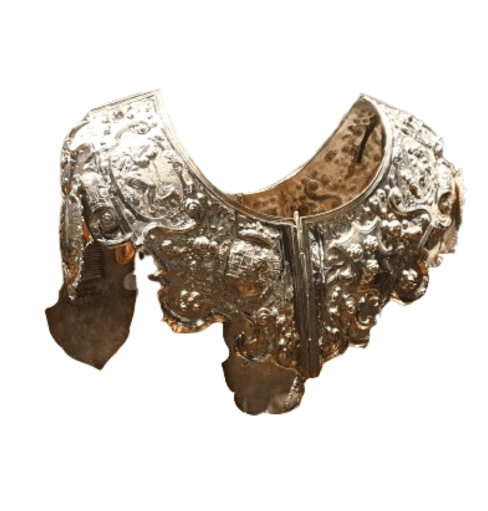
Although these collars were technically clothing rather than jewelry, they carried the same symbolic weight as earlier collar necklaces. They marked power, wealth, and separation from manual labor. The neck remained a focal point for expressing hierarchy and identity, reinforcing social structures through material form.
Millstone Collars
In the 17th century, a striking symbol of status and refinement in the Netherlands was the millstone collar, a large, circular ruff, often crafted from fine lace, that framed the wearer’s face and shoulders with dramatic elegance. The name “millstone collar” evokes its resemblance to the massive, flat millstones used in grain mills, emphasizing both its size and its geometric perfection.
These collars were initially inspired by Spanish fashion, brought north during the period of Habsburg influence. Over time, Dutch artisans and wearers adapted the style, creating collars that could range from modest to monumental, often supported by wire frameworks or heavily starched linen to maintain their shape. They were more than mere adornment; they signaled wealth, social position, and an awareness of contemporary European trends.
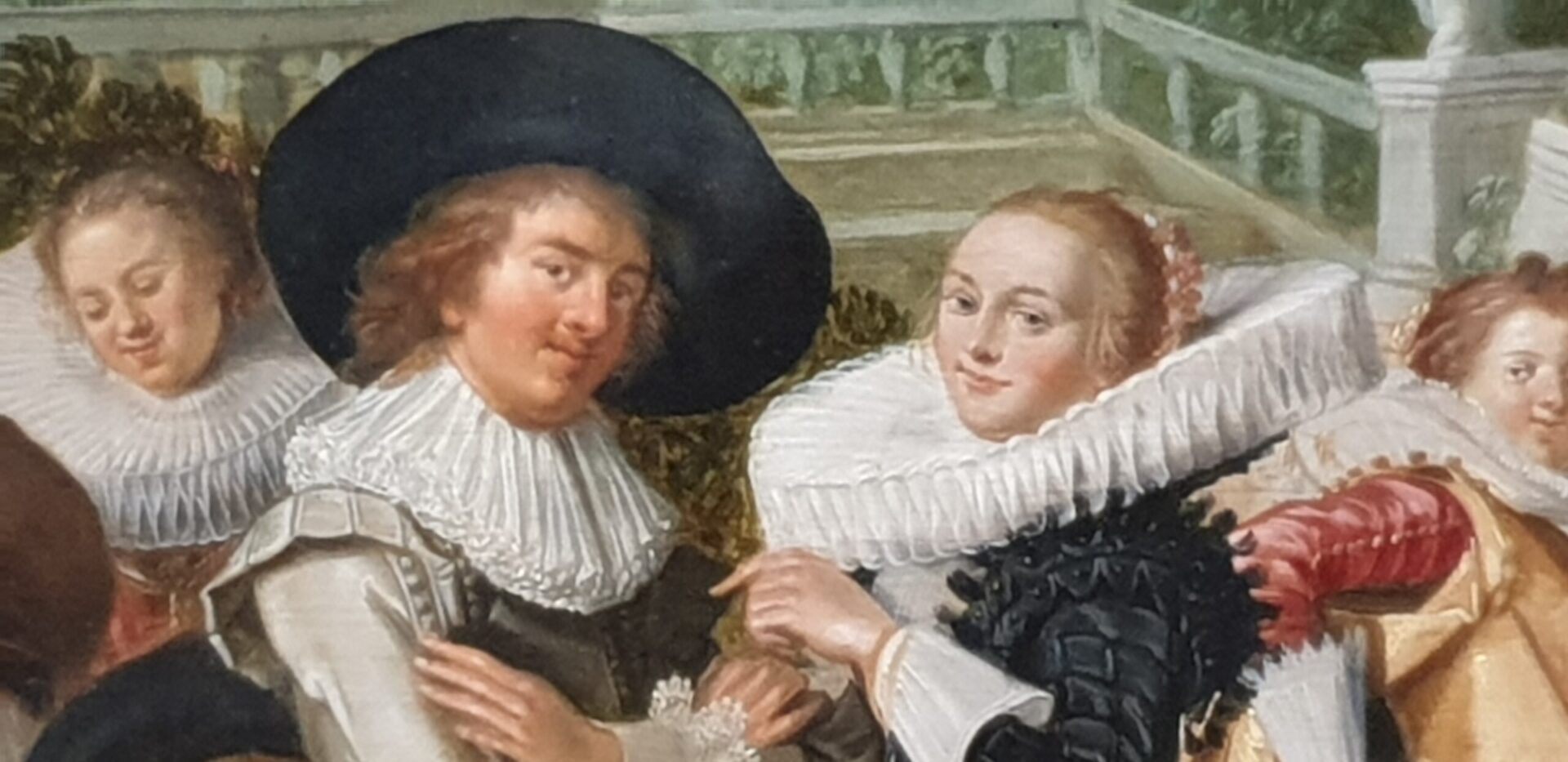
The intricate lacework and precise pleating required exceptional craftsmanship. Each fold and ruffle was carefully executed, making the collar as much a work of art as a garment. In portraits of the era, the millstone collar dominates the composition, drawing attention to the sitter’s face while simultaneously showcasing sophistication and access to luxury materials.
Though these collars eventually fell out of everyday fashion, their bold geometry, sculptural presence, and celebration of craftsmanship continue to inspire contemporary design. This enduring appeal forms the foundation for the modern revival, where historic silhouettes are reinterpreted for today’s aesthetic sensibilities.
The modern revival of the collar necklace
The modern era saw the collar necklace reemerge as an artistic and cultural statement. In the late nineteenth and early twentieth centuries, designers associated with Art Nouveau and Art Deco revisited the collar form. Some emphasized organic lines and natural motifs, while others explored geometry, symmetry, and luxury materials. Advances in metalworking and design allowed for new interpretations that balanced strength with elegance.
In the cultural shifts of the nineteen sixties and seventies, large collar necklaces inspired by African and Asian traditions became symbols of freedom, self-expression, and resistance to conventional norms. Wearing a bold collar was a way to claim visibility and individuality. Once worn, it changes not only how the body is perceived but also how the wearer inhabits space. The boldness of the collar invites presence, demanding attention while simultaneously offering a form of protective framing. It can convey confidence, challenge convention, and transform the simplest gesture into a statement. The collar necklace becomes both a personal and cultural marker, linking individual expression with broader narratives of identity, power, and tradition.
Want to know exactly which jewelry best suits your figure and face shape? I’ve put together a free eBook filled with dozens of practical tips to help you choose necklaces, earrings, and other pieces that highlight your natural beauty.
It’s easy to get your copy. Simply fill out the short form, and the eBook is yours, completely free. Whether you’re looking to make a statement or add subtle elegance, these tips will give you the confidence to wear jewelry that truly complements you.
Don’t wait, start discovering your perfect style today!

"*" indicates required fields
Florence from FlorenceJewelshop