
 NL
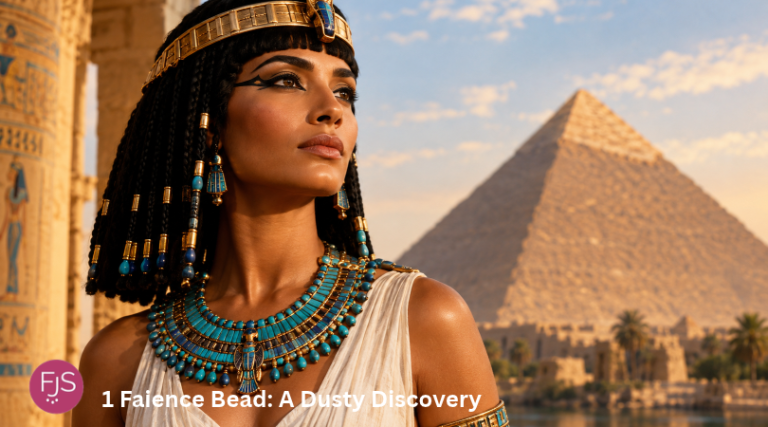
When I studied history, I also had to take a course in archaeology. This took me to Luxor in Egypt, where I worked as a junior archaeologist at the tomb of Ramses II in the Valley of the Kings. Little did I know that years later, a few ancient faience beads would become one of my most memorable souvenirs from Egypt.
Every morning, I rode a donkey to the tomb, hoping to make exciting discoveries. In reality, my main task involved an activity that has never made it onto my list of favourite hobbies: dusting. There was a great deal of dust, and I spent a great deal of time removing it.
By late afternoon, I would return to my accommodation, passing a tiny shop near my room. The shop itself could have done with a little dusting, too. One day, while looking through its dusty treasures, I spotted some beautiful turquoise-coloured scarab beads.
The shopkeeper explained their age and described how they had been made, with the kind of theatrical enthusiasm that makes even the most ordinary object sound extraordinary. After some bargaining, I bought them. Much later, I discovered that they were Egyptian faience beads. I turned them into earrings, which sold so quickly that I never got around to making a pair for myself.
But what exactly is a faience bead, and why did this material become so important in ancient Egypt?
What Is Egyptian Faience?
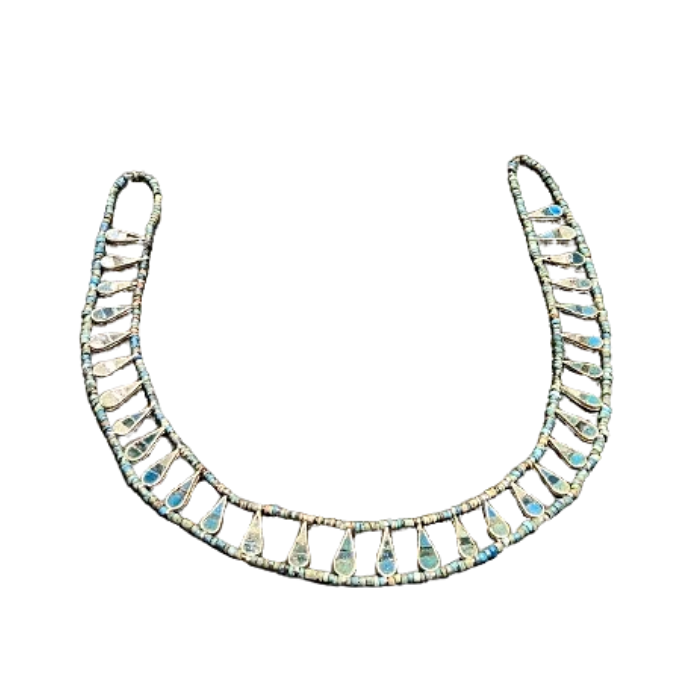
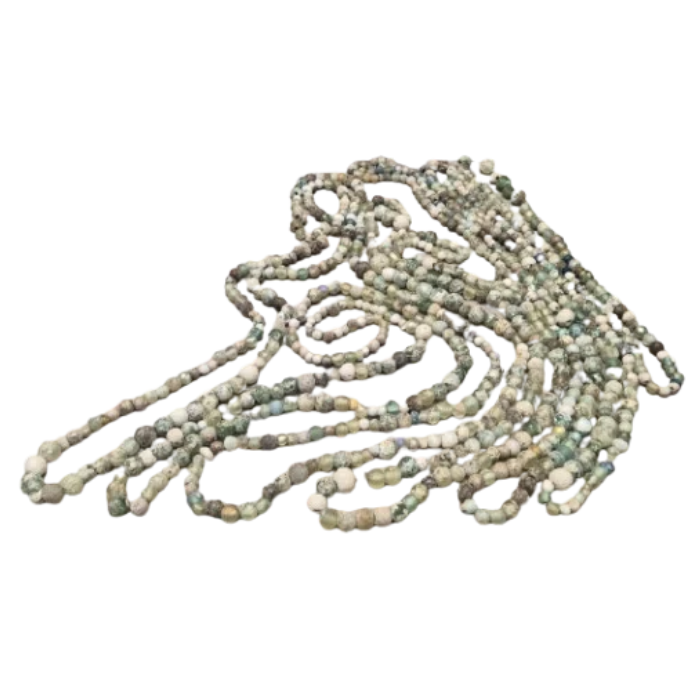
Despite the name, Egyptian faience is not the same as the glazed pottery known as faience in later European traditions. It is a distinctive material made mainly from crushed quartz or sand, mixed with small amounts of other ingredients and water.
The result could be shaped into faience beads, amulets, figurines, and many other objects. A shiny surface gave these pieces their distinctive appearance, often in shades of blue and green.
The ancient Egyptians had a special name for the material: tjehenet, a word associated with brilliance or shining. It was valued not simply because it was attractive, but also because its colours carried meaning.
From Sand to Shimmer
Making Egyptian faience required skill and careful control. The basic mixture contained finely ground quartz or sand, together with materials that helped the particles bind and the surface develop its characteristic glaze.
The object was shaped and dried before being fired. During firing, a glossy surface formed through a process involving the ingredients in the mixture. The precise recipe and method could vary, and craftspeople developed different ways of achieving the desired finish.
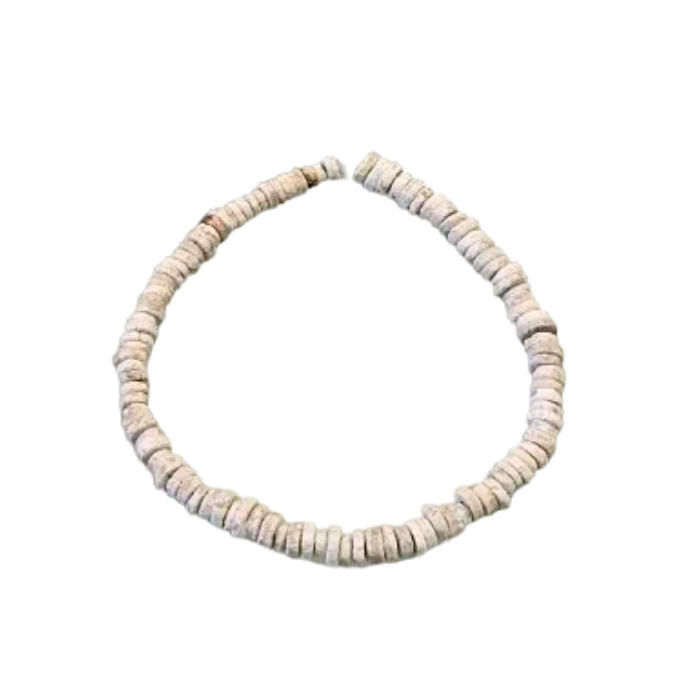
A small faience bead might look simple, but making one consistently required knowledge of materials, heat, and technique. Producing large numbers of faience beads meant repeating that process with considerable care.
An Ancient Craft
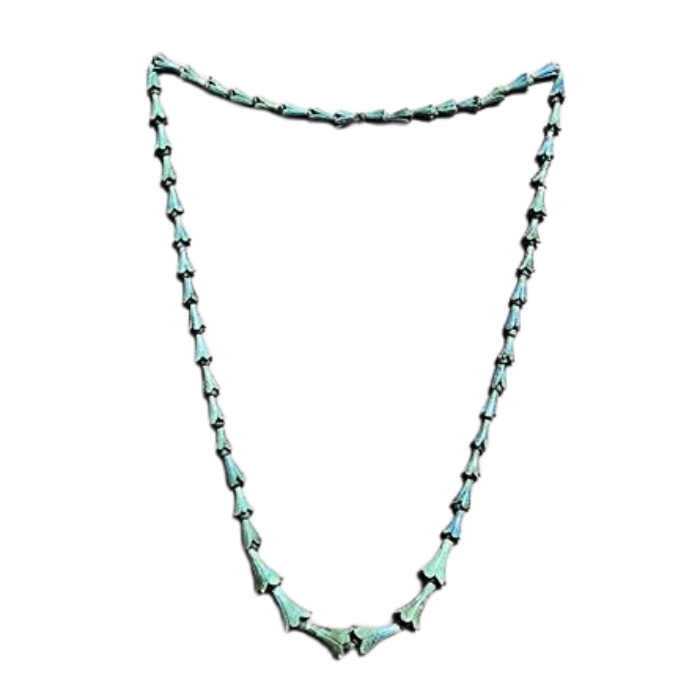
Faience appeared in Egypt thousands of years ago and became especially widespread during later periods of ancient Egyptian history. It was used for objects of different sizes, from tiny faience beads to elaborate decorative pieces.
Its appeal was easy to understand. Compared with some precious materials, faience offered a way to create colourful, glossy objects without needing a large amount of rare stone or metal. It allowed craftspeople to make jewellery and ornaments in a range of shapes and colours.
Faience was not exclusive to Egypt, either. Similar materials and techniques were used in other parts of the ancient world, although recipes, methods and styles differed.
From Scarabs to Hippos
Ancient Egyptian craftspeople were imaginative in their choice of shapes. Beads could be simple cylinders, rings or small discs, but faience was also used to make scarabs, animals, amulets and miniature figures.
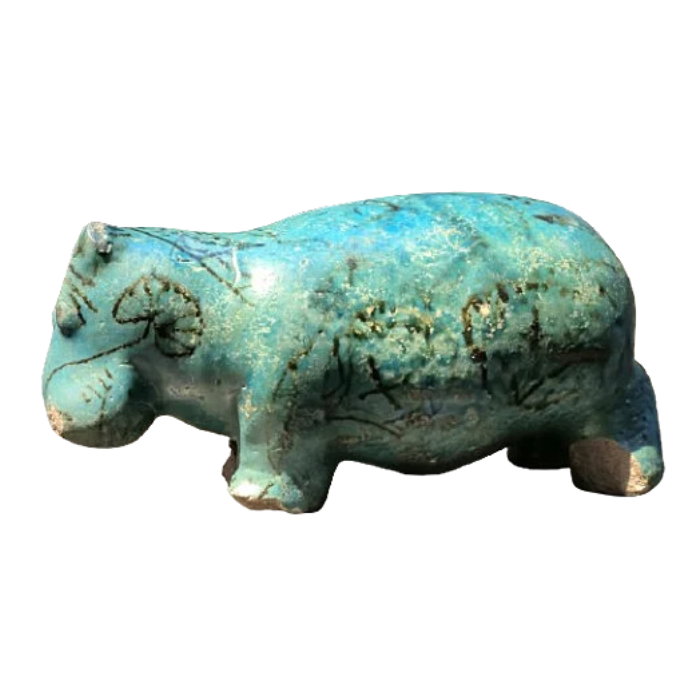
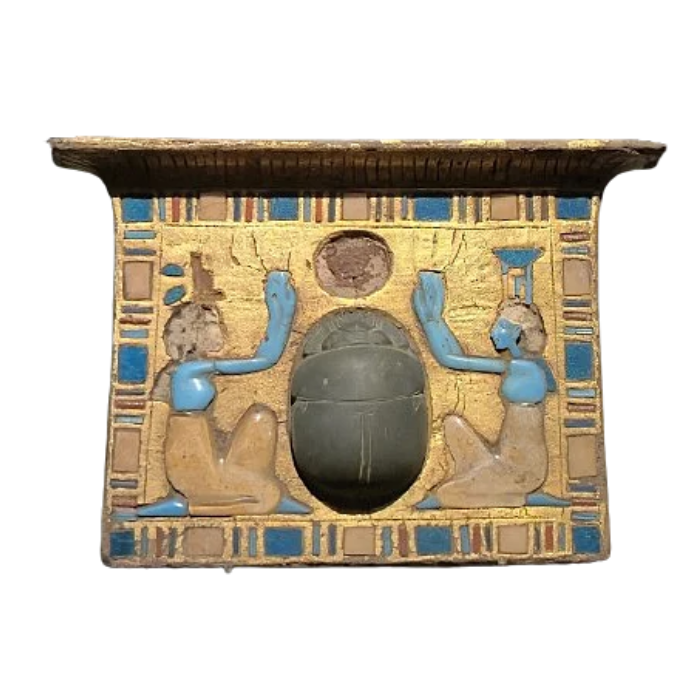
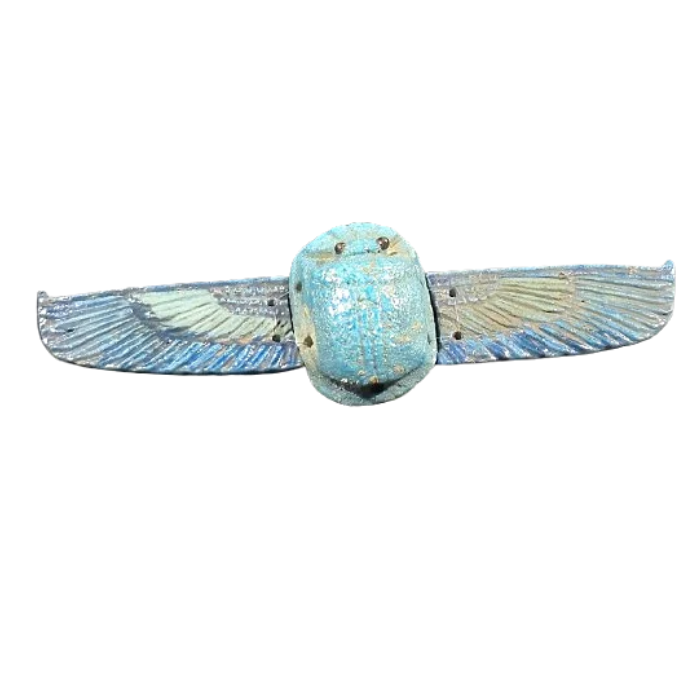
The scarab was particularly meaningful in Egyptian culture. Associated with the sun and ideas of renewal and rebirth, it was a popular form for amulets and jewelry. Hippos and other animals also appeared in faience objects, sometimes with symbolic significance.
This is one reason I find ancient jewelry so fascinating. A bead is never just a bead. Its shape, colour and context can tell us something about the people who made, wore or treasured it.

The Colours of Faience
Blue and blue-green are among the colours most closely associated with Egyptian faience. They could evoke water, the heavens and the natural world, although meanings depended on the object and its context.
Copper compounds were often used to produce blue or green shades. Changes in ingredients and firing conditions could influence the final colour, which helps explain the variety found in surviving objects.
Other colours were possible, too, including shades of white, yellow and black. The result was a versatile material that could be used on its own or combined with other materials in decorative objects.
Jewelry for Life and Death
A faience bead could be part of a necklace, bracelet, or other piece of jewelry. Faience was also used for amulets, which people wore or placed in burials. In ancient Egypt, jewelry could communicate status and taste, but it could also carry religious or protective associations.
Objects placed in tombs were part of a wider set of beliefs about the afterlife. Their meaning depended on the form of the object, its decoration, and where it was found.
For archaeologists, these small objects can be valuable sources of information. Beads and other ornaments help us understand craft traditions, trade, personal adornment and the beliefs of the people who used them.
A Network of Craftspeople
Producing faience objects involved more than one simple task. Someone had to prepare the raw materials, shape the objects and fire them successfully. Workshops could specialise in particular kinds of objects, and finished goods travelled beyond the places where they were made.
The distribution of faience and other materials helps archaeologists investigate connections between communities. Similar objects found in different places can offer clues about trade, exchange and shared styles, although each discovery needs to be considered in its own archaeological context.
From Ancient Egypt to My Workbench
My little scarab beads spent a long time waiting before I turned them into earrings. At the time, I was simply attracted by their colour and shape. Only later did I fully appreciate that they were made from a material with such a long history.
I went to Egypt hoping to make archaeological discoveries. Mostly, I discovered dust. But I also brought home a few tiny objects that connected my everyday life with a world thousands of years away.
That is one of the things I love about jewelry: it can be beautiful in its own right, while also carrying memories of the people, places, and times it has passed through.
My faience bead discovery began in a dusty shop in Luxor. It eventually became part of my own story, too. Sometimes, you only have to brush away a little dust to uncover something extraordinary.
Whether you like faience beads or not, I’ll bet you like jewelry, especially jewelry with a story, with a history. FlorenceJewelshop produced a PDF, full of useful tips on what jewelry you might wear best, to make you even more beautiful as you already are. That PDF is free os charge. Just fill in the form, and the download comes your way.

"*" indicates required fields