
 NL
NL
Introduction – The Unique Charm of Cultured Pearls
Cultured pearls are where human ingenuity meets nature’s artistry. Unlike natural pearls that form entirely by chance in an oyster or mussel, cultured pearls are carefully initiated through a process that encourages the oyster to create a pearl around an inserted nucleus or tissue. Despite this human intervention, each cultured pearl retains the organic beauty, depth of luster, and individuality that make pearls captivating.
Wearing cultured pearls is a statement of sophistication, connecting the wearer to centuries of tradition, exploration, and artistry. They embody a delicate balance between natural wonder and human craftsmanship. From the refined elegance of Akoya pearls to the large, luminous South Sea pearls, cultured pearls offer both consistency and uniqueness, making them highly prized in jewelry worldwide.
What Are Cultured Pearls
Cultured pearls are formed in oysters or mussels where humans have introduced a nucleus or mantle tissue to stimulate pearl formation. This method allows for greater predictability in shape, size, and availability while preserving the pearl’s unique characteristics. Cultured pearls can be freshwater or saltwater, and the process does not diminish their natural beauty; rather, it ensures that more people can enjoy them.
Historically, the discovery and perfection of pearl cultivation revolutionized the pearl trade. In the late 19th and early 20th centuries, Mikimoto in Japan perfected the Akoya cultured pearl technique, transforming pearls from rare curiosities into accessible treasures. Similarly, cultured South Sea and Tahitian pearls became internationally recognized symbols of luxury and refinement.
Cultured pearls retain all the symbolic and cultural meanings of natural pearls: purity, elegance, wealth, and timelessness. They are celebrated in art, literature, and fashion, and have been worn by royalty, celebrities, and collectors for centuries.


The Cultivation Process – Nucleation and Techniques
Saltwater cultured pearls typically involve inserting a small bead along with mantle tissue into an oyster, around which nacre accumulates. Freshwater cultured pearls, most commonly grown in mussels, often use only mantle tissue, producing pearls entirely of nacre without a nucleus. This distinction affects shape, luster, and texture.
The cultivation process requires patience and expertise. Oysters must be carefully monitored for health, environmental conditions must be controlled, and pearls must mature over several years to develop the desired luster and quality. Modern techniques combine traditional knowledge with technology, ensuring consistent quality while respecting the natural rhythm of pearl formation.
This blend of human guidance and natural process results in cultured pearls that are both predictable in quality and rich in individual character. Each pearl captures a moment in the oyster’s life, a microcosm of the ocean’s influence, and the craftsmanship of the cultivator.
Historical Cultured Pearls and Famous Anecdotes
The story of cultured pearls is deeply intertwined with Japanese innovation. Mikimoto Kokichi, in the early 20th century, mastered the art of bead nucleation in Akoya oysters, creating perfectly round pearls that became emblematic of modern luxury. His work not only transformed the pearl industry but also inspired generations of jewelers worldwide.
South Sea cultured pearls, cultivated primarily in Australia, Indonesia, and the Philippines, were historically reserved for royalty and elite collectors due to their size and rarity. Anecdotes abound of monarchs commissioning massive pearl strands, each pearl representing wealth, status, and prestige.
Tahitian cultured pearls, dark and iridescent, were steeped in local mythology. Legends spoke of them as gifts from the ocean goddess, meant to protect and bless those who wore them. European collectors were captivated by their exotic beauty, and by the mid-20th century, Tahitian cultured pearls became internationally renowned.
Even within freshwater cultivation, remarkable stories exist. In China, centuries-old techniques produced Keshi pearls as byproducts, valued for their irregular beauty and unique luster. Some were incorporated into religious ornaments, while others became treasured family heirlooms.
Shapes and Types of Cultured Pearls
Cultured pearls offer a diversity of shapes and types, each with distinct qualities.
- Akoya Cultured Pearls: Small, round, highly lustrous pearls, known for their reflective surfaces and uniformity.
- South Sea Cultured Pearls: Large, soft-glowing pearls in white, silver, and gold. Celebrated for their elegance and dramatic presence.
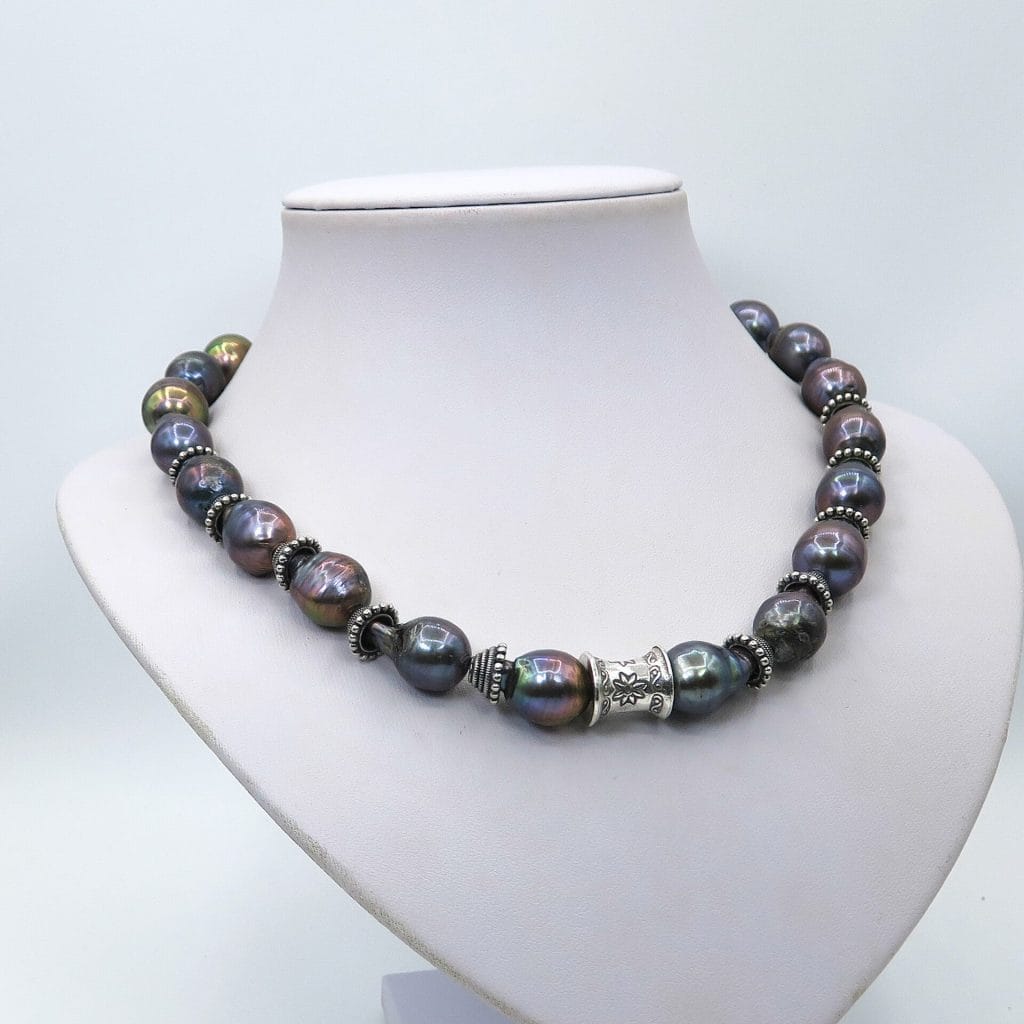
- Tahitian Cultured Pearls: Dark, often black or peacock-colored, with iridescent overtones. Exude mystery and exotic allure.
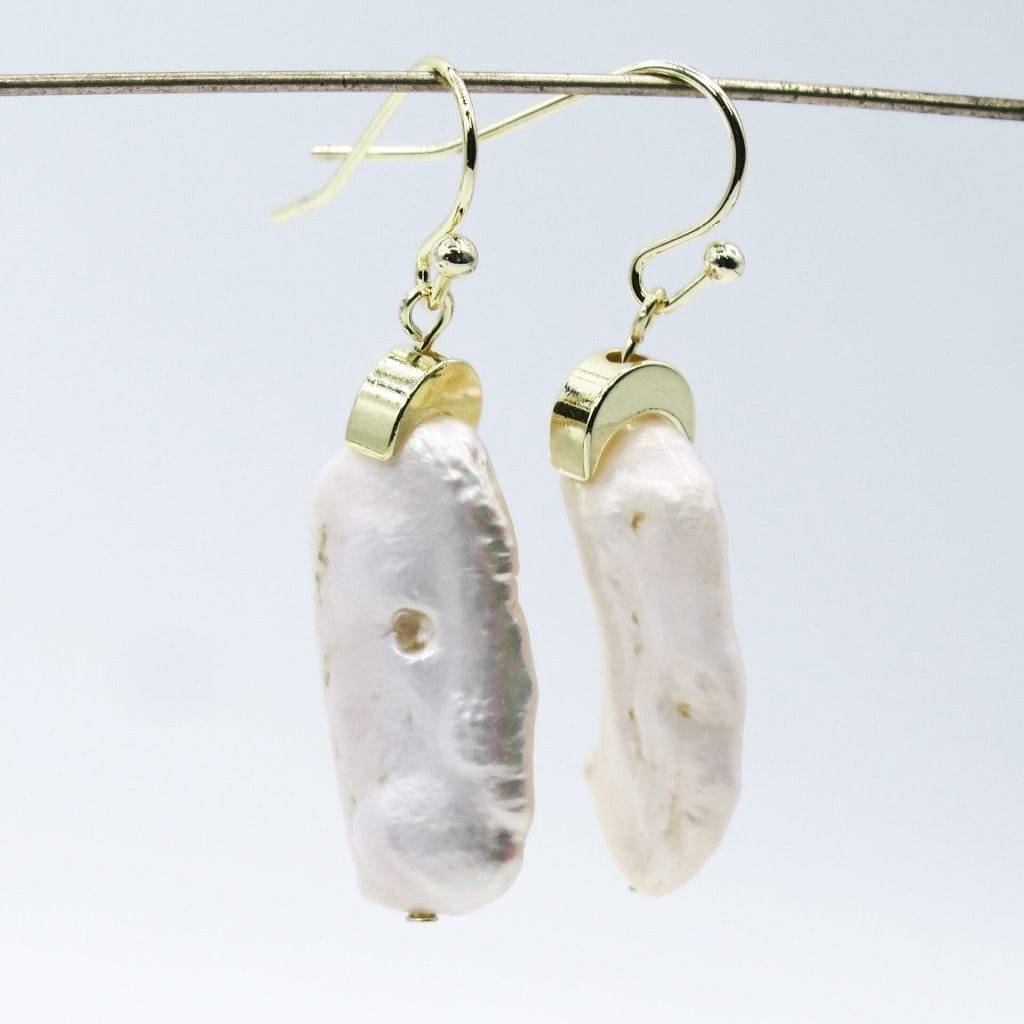
- Keshi Pearls: Byproducts of cultivation, entirely nacre, irregular, and highly lustrous. Popular in artistic and bespoke designs.
- Baroque Cultured Pearls: Irregular, sculptural pearls that add individuality and character to jewelry.
This variety allows designers to craft a broad range of jewelry, from classic strands to modern statement pieces. Cultured pearls blend precision and artistry, appealing to both traditionalists and contemporary creatives.
Luster, Nacre, and Durability
Cultured pearls are admired for their luster, the interplay of light on their nacre layers. Saltwater cultured pearls often exhibit sharper, mirror-like reflections due to thinner nacre over a nucleus, while freshwater cultured pearls offer softer, satin-like luster with layers of solid nacre.
Durability is an essential feature. Well-cultured pearls, with thick nacre and proper care, can endure for generations. Historically, cultured pearls have been used in high jewelry, ceremonial attire, and everyday adornment, demonstrating their longevity and versatility.

black baroque pearl necklace
€ 260.00
gold Biwa pearl earrings
€ 49.00
Exceptional and Legendary Cultured Pearls
Throughout history, cultured pearls have made their mark alongside natural pearls. Mikimoto’s first perfectly round Akoya pearls became legendary in Japan and Europe, setting new standards for beauty and consistency. South Sea pearls commissioned by royalty often became heirlooms, passing through generations and cementing their cultural significance.
Tahitian pearls, with their dark iridescence, inspired collectors and designers with their mystique. Some notable examples are exhibited in museums, celebrating both natural formation and human cultivation. These stories highlight how cultured pearls bridge nature and human innovation, offering beauty, rarity, and heritage.
Cultured Pearls in Jewelry Design
Cultured pearls provide designers with versatility. Uniform pearls can be strung into traditional necklaces, while irregular or baroque cultured pearls allow for contemporary, artistic compositions. Modern jewelers mix types, shapes, and colors to create bespoke pieces, from subtle everyday adornments to dramatic statement designs.
The history of cultured pearl jewelry is rich. From Akoya strands worn by European royalty to South Sea pearl sets in Asian courts, these pearls have defined elegance and taste. Today, cultured pearls continue to inspire designers seeking a balance of natural beauty and human refinement.
Price, Value, and Collecting
Cultured pearls are generally more accessible than natural pearls due to controlled cultivation, yet they retain high value, especially for large South Sea, Tahitian, and perfectly round Akoya pearls. Value is determined by size, shape, luster, surface quality, and color.
Collectors value provenance and cultivation history. A pearl from a historic Japanese farm, or a rare, large South Sea pearl, can become a treasured asset. Cultured pearls combine beauty, rarity, and cultural significance, making them appealing for both investment and personal enjoyment.
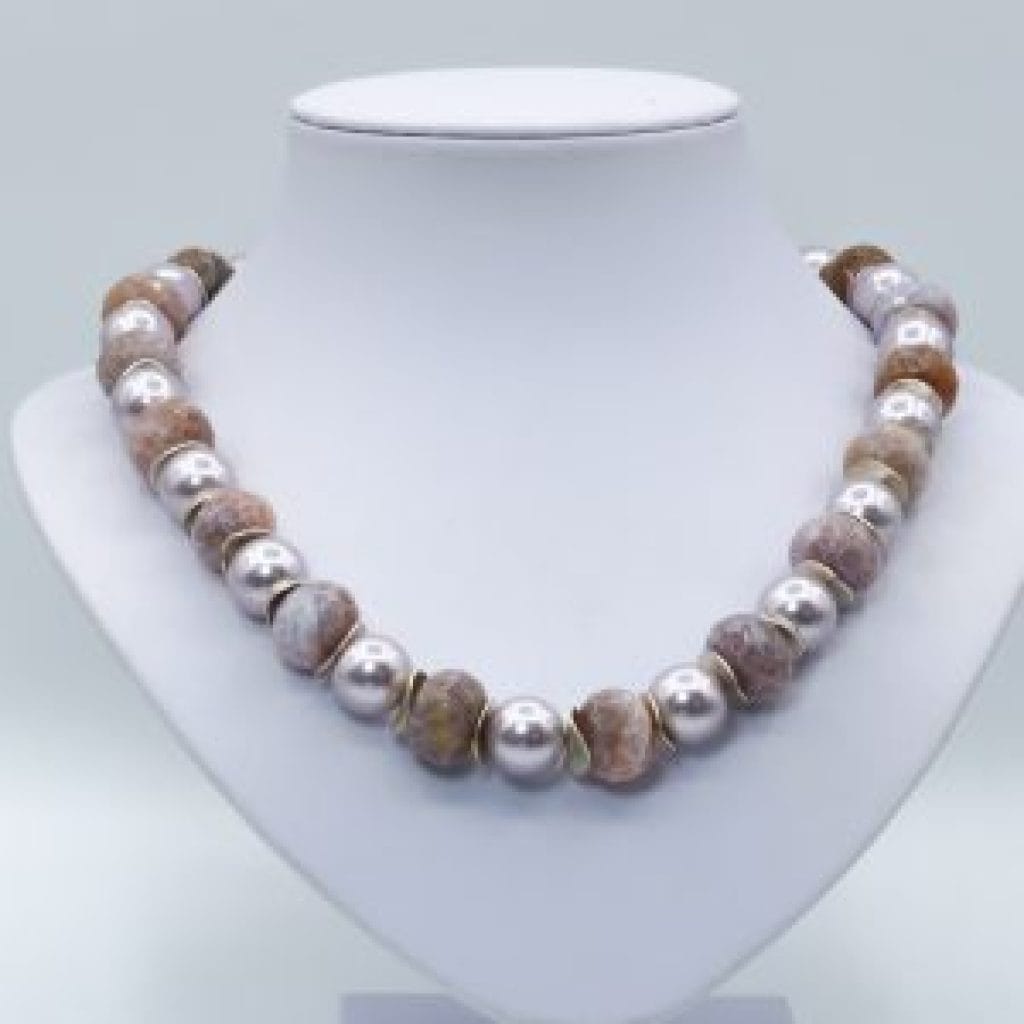
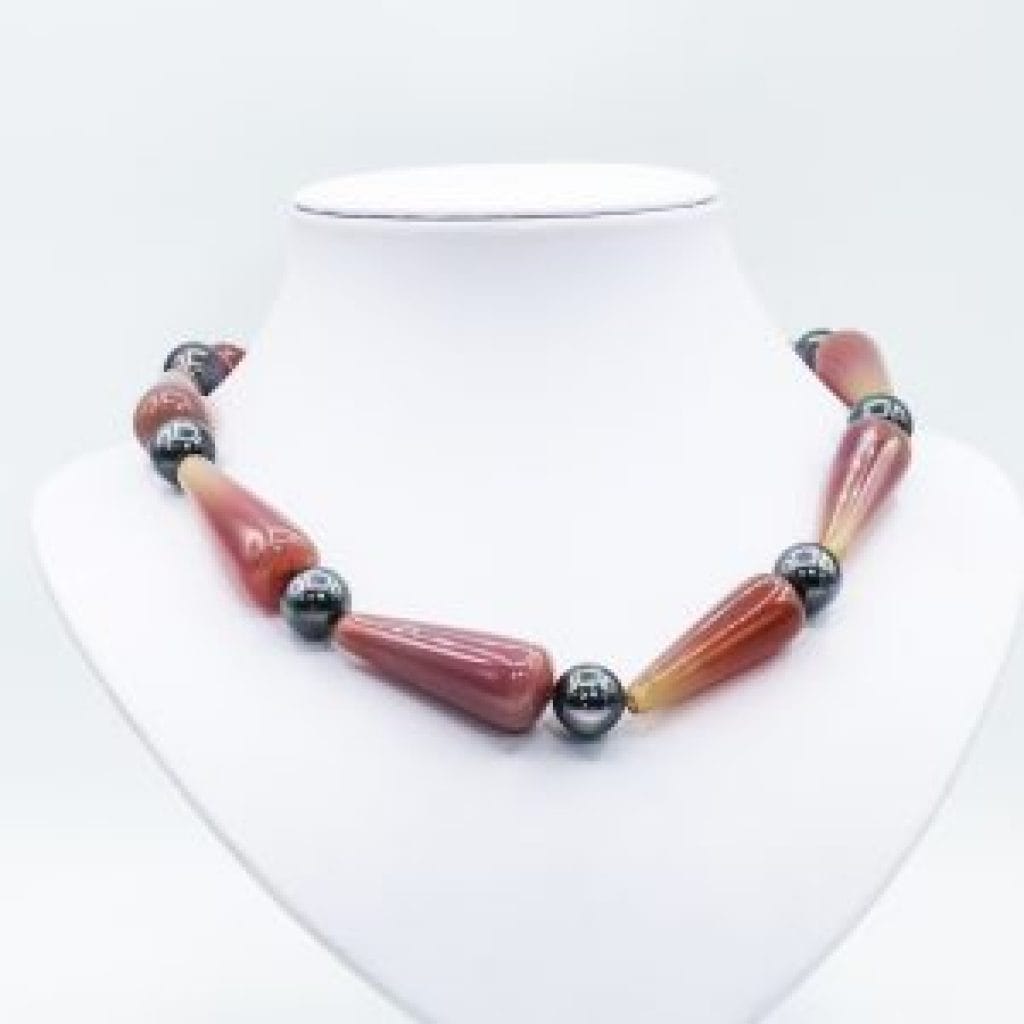
purple agate necklace (1 available)
Original price was: € 125.00.€ 110.00Current price is: € 110.00.
What Are Shell Pearls?
Shell pearls are man-made pearls crafted from the inner lining (nacre or mother-of-pearl) of oyster shells. The shell is ground into a fine powder, shaped into a bead, and then coated with additional nacre to give it a rich luster. The result? A pearl made of the same material as a natural or freshwater pearl, just formed differently.
While shell pearls are not naturally grown, they aren’t entirely “fake” either. Like lab-created or synthetic pearls, they’re made from the same ingredients as natural ones. The only difference is the process.
Why Choose Shell Pearls?
There are several good reasons to consider shell pearls:
- Budget-friendly beauty: If your budget doesn’t stretch to natural pearls, shell pearls offer the same elegant look at a more accessible price.
- Durability: Perfect for everyday wear, shell pearls are resistant to perfume, sweat, medication, and even mild detergents.
- Consistent quality: Because they’re man-made, you get uniform size, shape, and color, ideal for perfectly balanced designs.
- Customization: Need a specific color or unusual size? Shell pearls come in a wide range of options, not always available with natural pearls.
- Longevity: Natural pearls may fade over time if not cared for, but good-quality shell pearls retain their beauty for decades, maybe even forever.
Shell pearls might not be for everyone, but they have their place, especially in designs that call for consistency, durability, and accessible elegance. Whether you’re looking for a reliable material for your everyday jewelry or just want to play with bold shapes and colors, don’t overlook the charm of shell pearls.
And if you’re lucky enough to stumble across a few rare baroque beauties as I did, snatch them up. Trendy or not, true beauty always finds its place.
Choice of Shape and Color
If you love bold statement jewelry with slightly larger pearls, or if you’re looking for a specific color to match your outfit, shell pearls are worth exploring!
Since shell pearls are man-made, every bead can be crafted to perfection. That means your necklace or bracelet will have a consistent size, weight, and color, resulting in a piece that looks harmonious, polished, and simply beautiful. Because they can be produced in nearly any shade, weight, or diameter, your ideal color combo or design is very likely out there. It’s hard not to find the right pearl when the options are nearly endless.
Budget-Friendly Elegance
Natural pearls, especially in larger sizes, can be very expensive, sometimes even out of reach for everyday wear. And while glass pearls might be cheaper, they often lack both the beauty and durability you want in your jewelry.
That’s where shell pearls shine. They offer a high-end look at a far more accessible price point. You get that luxurious glow and beautiful craftsmanship without breaking the bank.
So next time you’re shopping for a pearl necklace, bracelet, or pair of earrings, take a second look at shell pearls. You might just fall in love.

How to Tell What’s What?
Telling a shell pearl from a natural pearl isn’t always easy. But here are a few helpful clues:
- Price: Natural pearls are significantly more expensive, sometimes up to 90% more. If you come across “natural” pearls at a bargain price, be cautious.
- Color: Shell pearls come in every color you can imagine. Real pearls occur in more limited, organic tones, though naturally colored pearls in black, gold, pink, and brown do exist.
- Luster and consistency: Shell pearls often have a flawless surface and mirror-like shine, whereas natural pearls may show tiny irregularities when viewed up close.
A Jewelry Designer’s Secret: Shell Pearls
As a jewelry designer, I love using shell pearls—especially when combining them with harder gemstones. Natural pearls can be delicate and easily scratched by materials like silver, quartz, or lapis. That’s why I’d normally need to knot between each bead for protection. But with shell pearls, this isn’t necessary. They’re tougher, more resilient, and perfect for modern designs where a continuous strand of beads looks better.
Even silver beads or rougher gemstones won’t damage a well-made shell pearl. That’s a huge bonus for durability and design freedom!
Conclusion: Beauty, Tradition, and Modern Appeal
Cultured pearls exemplify the harmonious collaboration between nature and human skill. They capture the mystery and depth of the ocean while offering consistency and predictability that enable artisans to craft exquisite jewelry.
From Akoya pearls to South Sea, Tahitian, and Keshi varieties, cultured pearls embody centuries of tradition, innovation, and artistic expression. Each pearl tells a story, linking the wearer to history, craftsmanship, and the timeless allure of the sea. Cultured pearls are more than ornaments; they are living art, connecting heritage, nature, and personal expression in a single luminous jewel. They demonstrate that beauty can be cultivated, preserved, and celebrated for generations to come.
Logically, a pearl is called a gem or even a gemstone. They are so ingeniously formed by such ‘clever’ animals, who give us such beautiful pieces of nature to make the most beautiful jewelry. For every budget and taste, there is a pearl. FlorenceJewelshop has made handmade, unique (no duplicates), and exclusive necklaces, earrings, and bracelets made of pearls. Just have a look.
I wrote a great and free e-book about pearls. You will find a lot of information there. It’s free, and just let me know where I can send it.

"*" indicates required fields
Florence from FlorenceJewelshop