
 NL
NL
Today, we have access to cutting-edge techniques and materials from all over the world. Whether by plane or boat, distance is no obstacle to sourcing what we need.
Technological advancements have a remarkable ability to change the world, just as the excitement surrounding the first moon landing or the advent of electric cars has shown.
Long ago, during the Bronze Age, the discovery of metalworking had a similar transformative effect. This breakthrough revolutionized not only the way people lived but also the structure of society itself.
In this blog, you’ll learn about the profound changes that came with the discovery of bronze and the techniques used to shape it. Plus, you’ll discover the beautiful jewelry and objects that people in the Bronze Age were able to create from this remarkable material.
Why and when do you call a period the Bronze Age?
Around 1830, a Danish archaeologist sought to classify ancient periods based on the materials used for tools, weapons, household items, and jewelry. He named these periods the Stone Age, Copper Age, Bronze Age, and Iron Age, with each age defined by the dominant material of the time.
However, this classification becomes tricky, as not all regions adopted copper or bronze at the same time. For practical reasons, it isn’t easy to set separate starting points for the Bronze Age in different parts of Europe.
Research indicates that the Bronze Age, when people first developed the ability to work with bronze, began around the 4th to 3rd century BC. The height of bronze use and craftsmanship occurred in the 3rd century BC.
As for the end of the Bronze Age, it varies by region. Some scholars mark its conclusion at 1200 BC, while others suggest it lasted much longer, stretching until 1200 BC or even as late as 600 BC.


What is bronze?
Bronze is an alloy made by humans from copper and tin, marking a significant advancement for societies that previously only used stone to create tools and objects.
Unlike stone, bronze was easier to shape and sharpen, making it ideal for weapons and kitchen knives, and it was more durable. Additionally, bronze could be melted down and reused, allowing people to repair or create new items as needed.
But the impact of bronze wasn’t just practical; it also revolutionized decoration. Previously, jewelry was crafted from bone and stone, but with bronze, people could create pieces with intricate designs and beautiful detailing. This shift marked a major advancement in jewelry-making.
The sturdiness of stone jewelry gave way to the elegance of bronze, which allowed for the creation of long, delicate, and intricate items. Craftspeople used molds to cast bronze into shapes or hammered it into form, resulting in new types of jewelry such as rings, bracelets, anklets, hairpins, and even buttons.
As people mastered these basic techniques, they began to experiment with new ways to decorate their bronze creations. Two of the most notable techniques were ‘repoussé’ and ‘chasing.’
Although similar, these methods have distinct differences. In chasing, the metalsmith pushes the metal from the front to make the design protrude outward, hammering the design on a center point. In repoussé, the design is hammered from behind, creating a raised effect on the front of the piece.
Use of gold in the Bronze Age
As metalworking became a skill mastered by blacksmiths, the use of gold for crafting jewelry also emerged. Gold, which was often found in rivers, was easier to obtain than bronze, and unlike bronze, it didn’t need to be combined with other metals like copper and tin.
When bronze was polished to a high sheen, it took on a golden hue, something that people in the Bronze Age admired. Of course, gold naturally shares this beautiful property. Both gold and bronze were used as grave goods, and during the Bronze Age, these metals held significant value.
You could say that gold became the dominant material for jewelry in the Bronze Age, thanks to the discovery of metalworking techniques for precious metals. The methods used to craft and shape bronze were similar to those used for working with gold. This enabled the creation of beautiful gold jewelry, including bracelets, rings, earrings, necklaces, and large but elegant neckpieces like the torque or gorget.
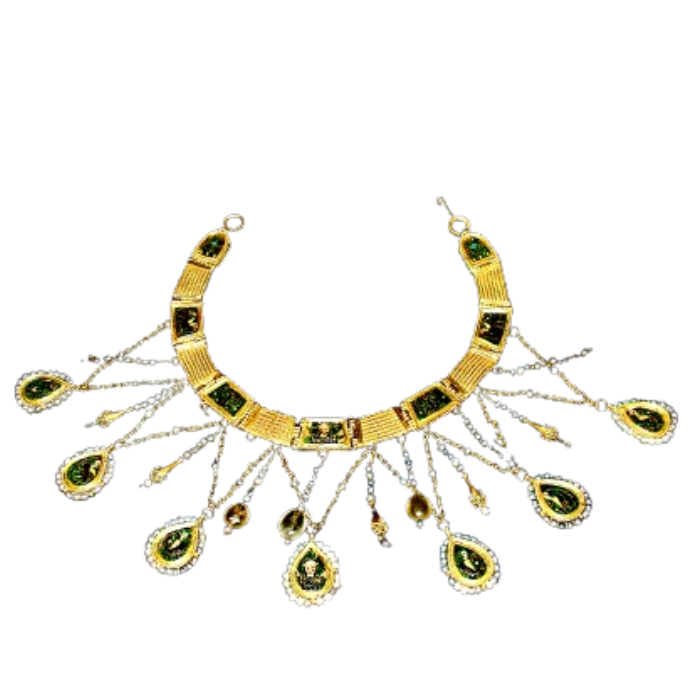
The beginning of the production of gold jewelry in the Bronze Age.
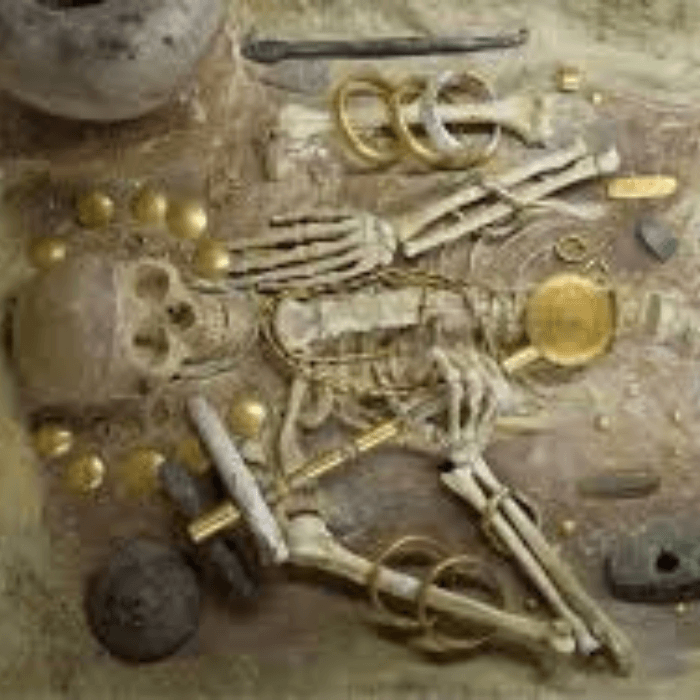
As early as the Copper Age, gold jewelry was being crafted in the northeastern part of Bulgaria by the Varna Culture. During the Bronze Age, these gold pieces became symbols of wealth and power, worn by the elite of society.
One of the most remarkable discoveries was made in the Varna Necropolis, where the tomb of a nobleman was unearthed, containing a wealth of gold bracelets, rings, earrings, and even a weapon. The grave is dated to between 4569 and 4350 BC.
The Varna Necropolis is often considered a treasury of gold jewelry, with more gold artifacts found there than in the rest of the world at the time, including the treasures of Mesopotamia and Egypt combined.
The world turned upside down during the Bronze Age.
Society underwent significant changes during the Bronze Age. While in the Stone Age, people mainly lived on self-sufficient farms, by the Bronze Age, these farms were producing slightly more than what was needed to feed the immediate community.
The discovery of metalworking led to the emergence of specialized craftsmen, such as metalworkers and goldsmiths. This specialization was a new development that had not existed before.
As mentioned earlier, bronze is made from copper and tin, but these materials were not available everywhere in Europe. This meant that if you wanted to obtain bronze, you had to rely on networks to acquire it from other regions.
Establishing a large-scale and continuous supply of bronze required building these trade networks. Since currency as we know it didn’t exist, people relied on barter to obtain materials. Amber and gold, for example, were commonly used as trade goods to “purchase” bronze objects and jewelry.
This trade network extended far beyond Europe, bringing influences from other regions. The Baltic States, Scandinavia, and the northern North Sea coast were key suppliers of amber, which was exchanged throughout Europe, and even as far as Egypt.
Gold was also found in many parts of Europe, with Ireland being home to large gold deposits. And while it’s often said that the roads of Egypt were paved with gold, this is, of course, a figurative expression, though it highlights the prominence of gold in trade and society.
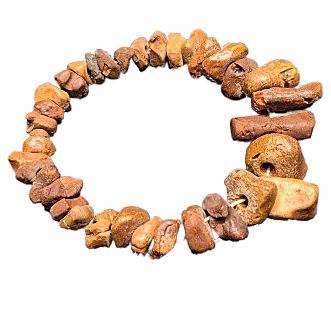
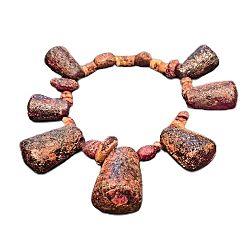
Amber was traded over vast distances during ancient times. For example, an amber bead found beneath the ziggurat of Assur along the Tigris River (in present-day Iraq) was traced back to the Baltic States. Similarly, a glass bead from Egypt or Mesopotamia (the land between the Euphrates and Tigris rivers) traveled westward and was found near Tiel in the Netherlands.
Around 2900 BC, people from the East migrated to Europe, bringing with them agricultural knowledge, trade networks, metalworking techniques, burial mound practices, and new drinking customs. This migration laid the foundation for the Bronze Age.
The need for this emigration stemmed from the dwindling pastures in the East, as the steppes began to dry up. These early migrants had access to carts, horses, and oxen, which allowed them to travel and transport goods more efficiently.
The owners of bronze symbols of wealth and power sought to expand their influence. To do so, they waged wars using bronze weapons, which only deepened the divide between social classes.
These migrants also introduced the custom of burial mounds, initially used to bury entire families. Over time, these mounds came to serve as tombs for individual leaders. Through the discoveries made in these burial mounds, we have learned a great deal about the materials available, the techniques used, and the social structure of these societies. The grave gifts found within these mounds revealed the existence of distinct ranks and classes.
Jewelry in the Bronze Age
When you have more resources than just what’s needed for daily survival, the next natural step is often to distinguish yourself from others. You begin to shape your identity.
This expression of identity can take many forms, such as wearing different clothing or styling your hair in unique ways. However, clothing and hairstyles don’t tend to survive the test of time, especially after centuries of being buried underground. Jewelry, on the other hand, often does.
This is why archaeologists are thrilled when they find jewelry. It provides valuable insights into the individual’s identity, their wealth, social status, gender, and the techniques used during their time. The people who migrated from the East to Europe introduced the custom of burying their dead in communal burial mounds, with kings and other important figures often having their mounds.
During the Bronze Age, this burial tradition evolved. Instead of communal mounds, the deceased were more frequently cremated and buried individually in mounds.
Numerous pieces of jewelry have been discovered in these burial mounds. It appears that people believed certain items were essential for the afterlife, as they consistently placed similar objects in the graves. Commonly found items include a cup or mug, a weapon or blade, an axe, and often some organic objects that have since decayed.
Many jewelry pieces were also placed as offerings to the gods. In the Netherlands, for instance, a leather bag containing three bronze fibulae (pins), two bronze bracelets, and bronze hair rings was discovered. While we can’t be certain of the exact intent, it’s possible these items were offered to the gods, used to request favors, or perhaps kept as valuable objects protected from theft.
Interestingly, the jewelry found in burial mounds wasn’t always worn by the deceased. These “sacrificial finds” suggest that jewelry was mostly worn during rituals and was considered communal property, shared by a tribe or community.
This, however, was not the case for the elite. Those with greater wealth were buried with their personal collection of gold jewelry, reflecting their higher status and abundance.
The types of jewelry in the Bronze Age
In the Bronze Age, several types of jewelry were popular. That is to say, these are the jewelry that we find in graves as grave gifts and in, for example, marshes or buried offerings elsewhere.
Hair pins
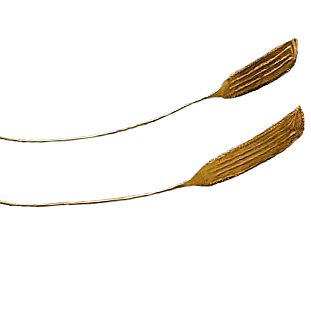
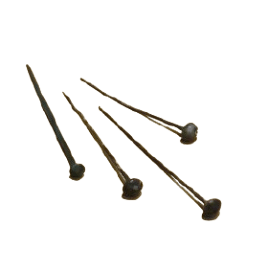
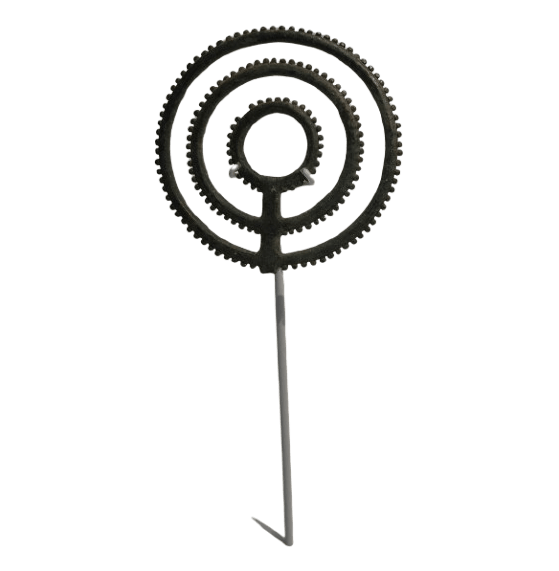
First of all, the hair decorations. These could be a kind of hairpin, but also hair rings, which were made of bronze or gold.


Necklaces
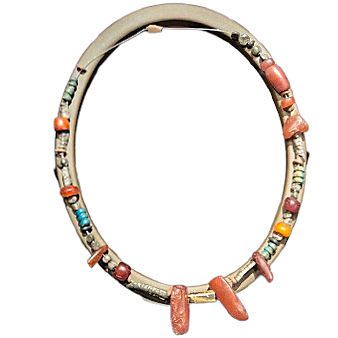
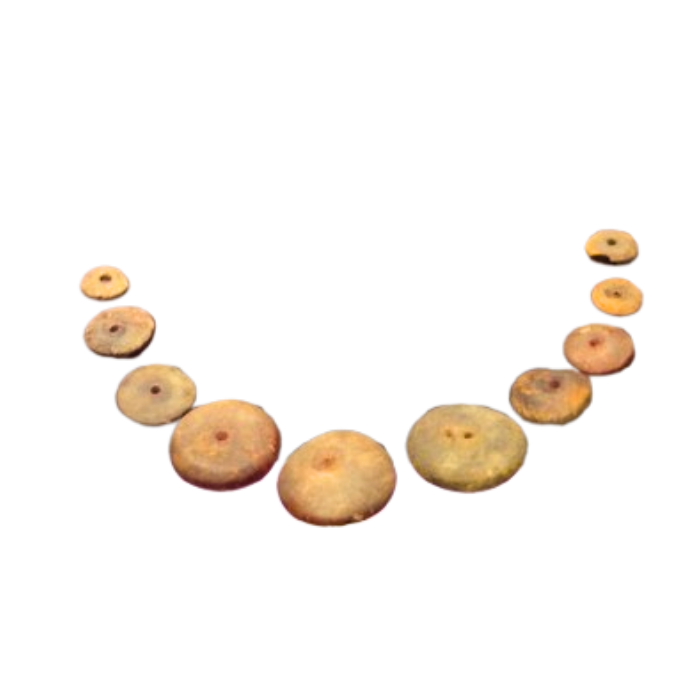
During the Bronze Age, a variety of neck ornaments and necklaces were made, primarily from bronze, gold, or beads.
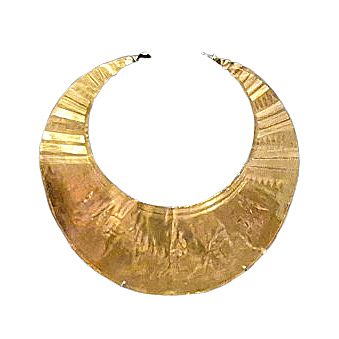
In the late Stone Age and early Bronze Age, one notable type of ornament was the golden lunula. This crescent-shaped neck ornament, often worn as a collar or chest piece, was crafted from gold and used primarily for decoration rather than neck protection, as evidenced by its intricate designs and material. The lunula was ceremonial, symbolizing status and belonging to important rituals. In contrast, bronze was commonly used for more functional, everyday jewelry.
The lunula served as a decorative neckpiece, crafted from thin sheets of gold. Gold, being a precious and ornamental metal, was reserved for items of ceremonial and decorative value, while bronze was the material of choice for tools and utilitarian objects.
Interestingly, lunulae were typically not found in graves. Instead, they were discovered in specific locations, suggesting they were offerings, possibly left behind in ritualistic or sacred sites. The most common technique used to decorate the lunula was incision. Artisans would carve sharp, precise patterns, such as zigzags and diamond shapes, into the thin gold sheet, which was usually no more than one millimeter thick.
The first gold lunulae were crafted in Ireland during the early Bronze Age, a region known for its rich gold mines.
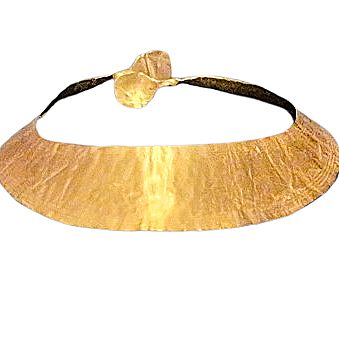
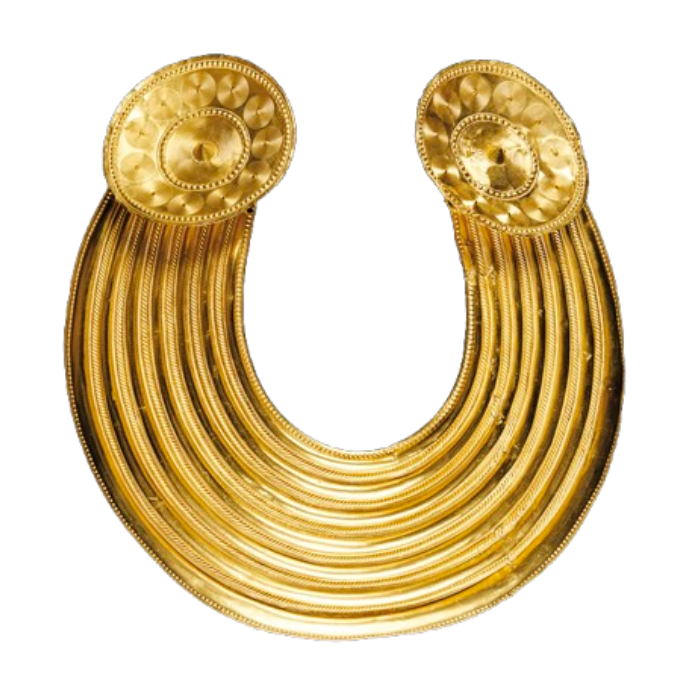
A slightly later neck ornament from the Bronze Age is the gorget. This large, collar-like piece of jewelry gives the illusion of being made from several cords of gold woven together, though it was formed from a single piece of thin gold sheet. The gorget was primarily worn in the Late Bronze Age, and like the lunula, it was decorated using the repoussé technique, in which the design is hammered into the metal from the back to create a raised pattern on the front.
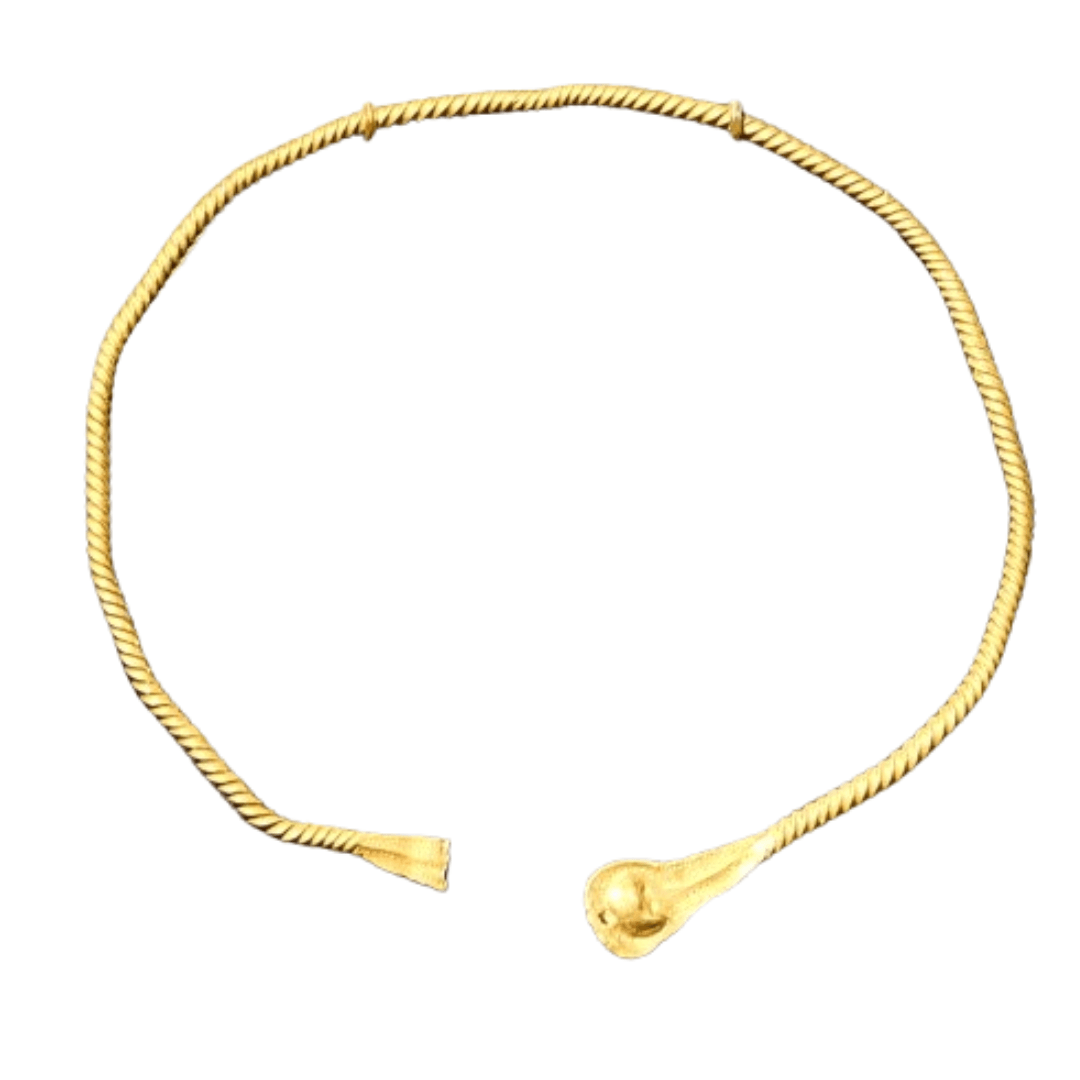
Another popular neck ornament during the Bronze Age was the torque, which came in a variety of styles, lengths, and sizes. Torques could be worn as necklaces, bracelets, rings, or even belts. Smaller torques were typically fastened by tightening them around the neck, wrist, or finger, while larger torques were connected by fastening the ends together. These ornaments served as both fashion items and decorative jewelry, worn in everyday life and also in ceremonial contexts. Many torques have been discovered in graves, often accompanying the deceased as grave goods, further highlighting their importance in Bronze Age society.
Bracelets
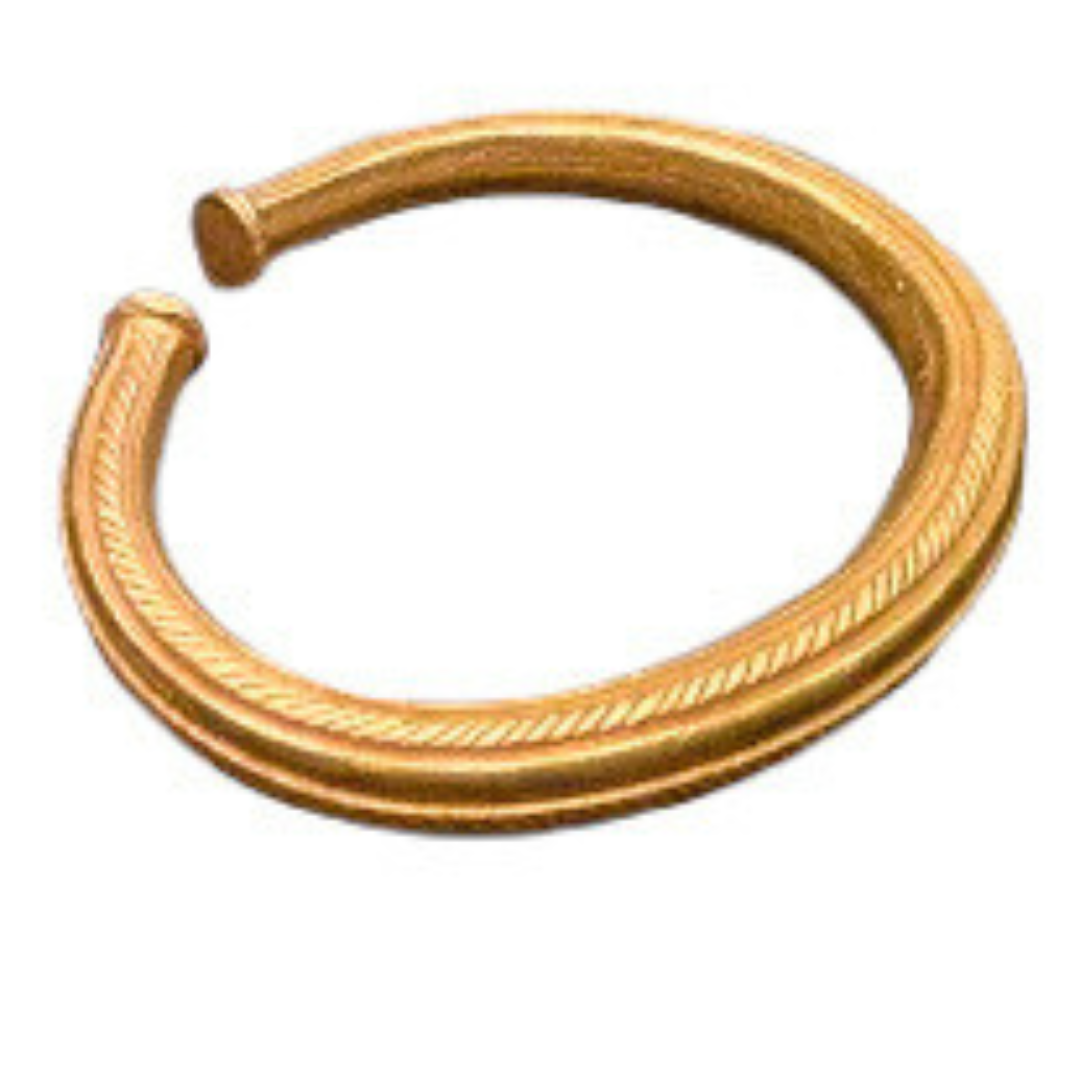
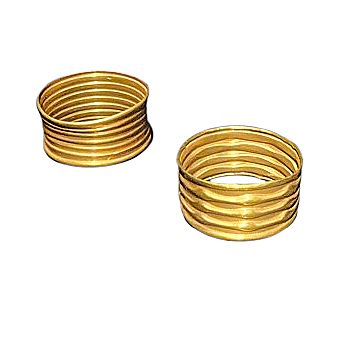
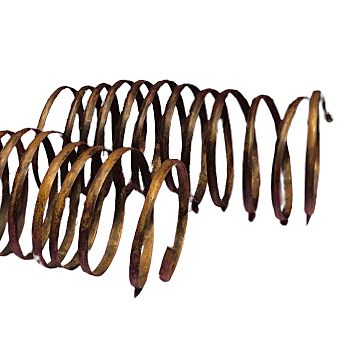
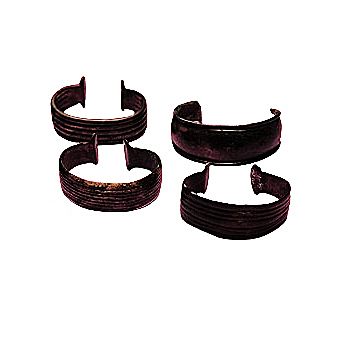
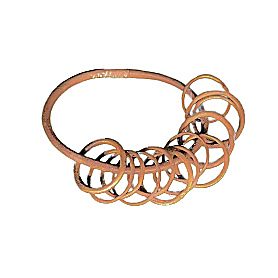
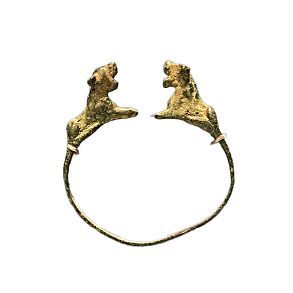
We regularly find bracelets in Bronze Age graves and places where jewelry was left behind as an offering to the gods. For daily use, bronze bracelets were mainly used for ceremonial purposes, and among the elite, the gold ones were popular.
There were bracelets made of solid gold, and these were relatively heavy. Another model was the spiral bracelets, which came in different lengths.
Fibulae or pins
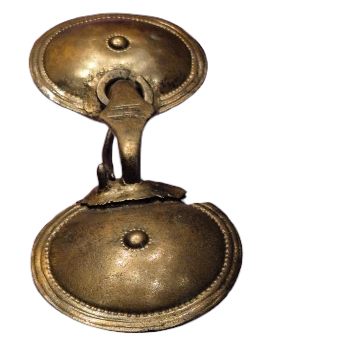
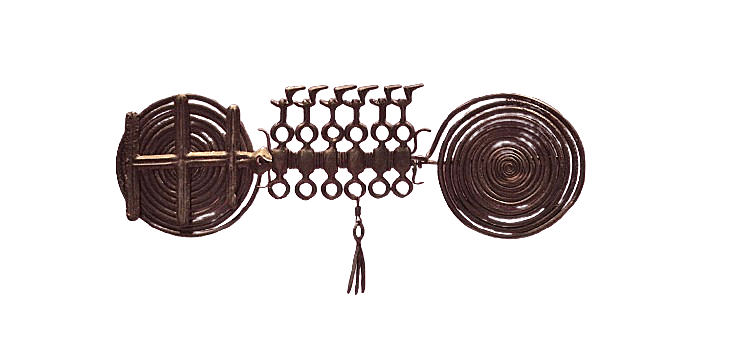
Fibulae, pins, and brooches are clothing items that have existed since the Stone Age. In times when zippers and buttons had not yet been invented, fibulae were used to hold clothing items together. They come in over 100 shapes and sizes.
With fibulae, you can quickly find out which period they come from because each period uses a certain material to produce them, and each period and region has its model.
Special Jewelry
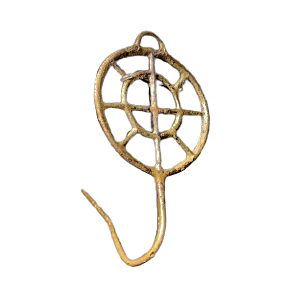
Finally, here are the images of some very special jewelry from the Bronze Age, which certainly deserve the attention and the spotlight.
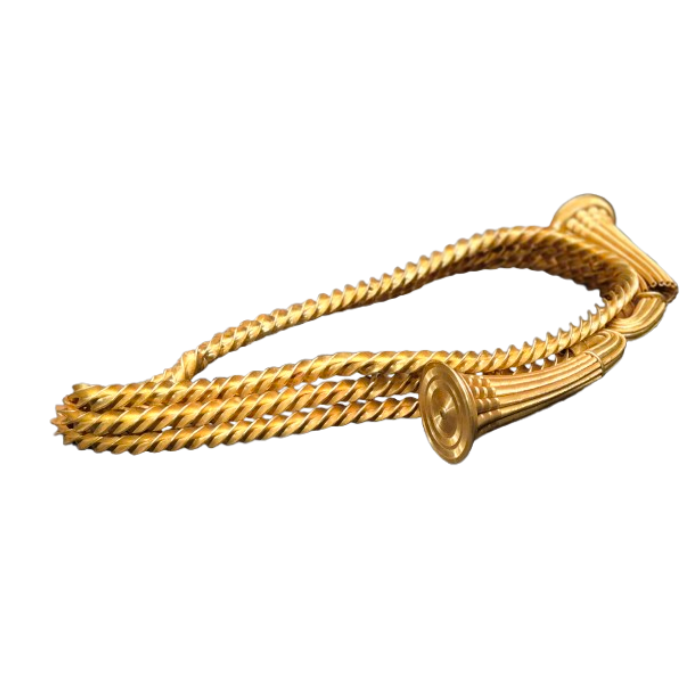
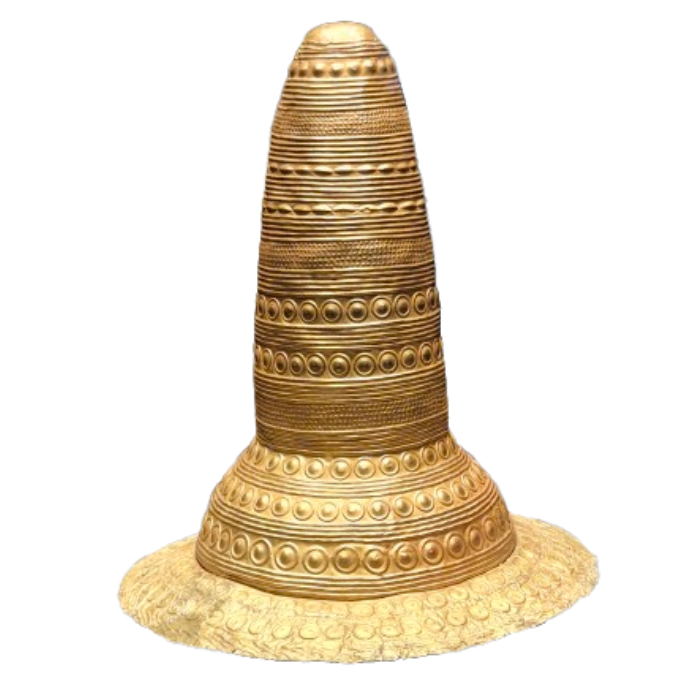
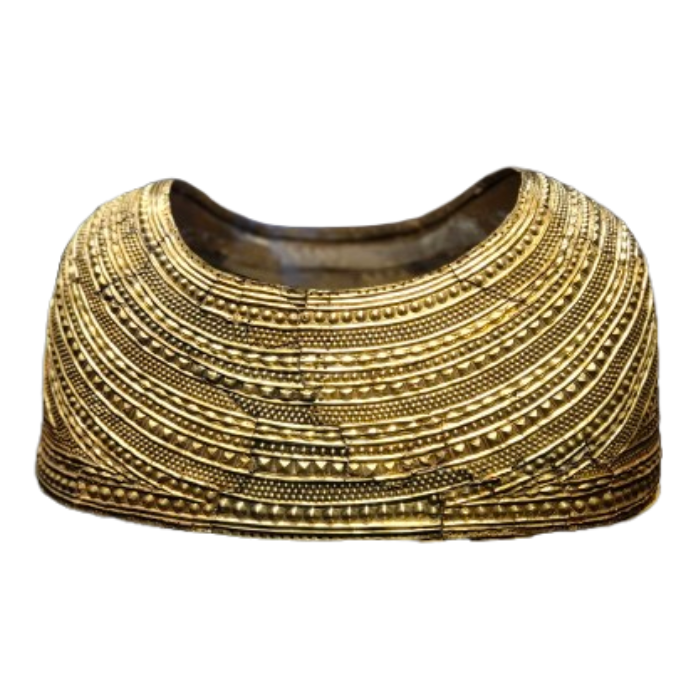
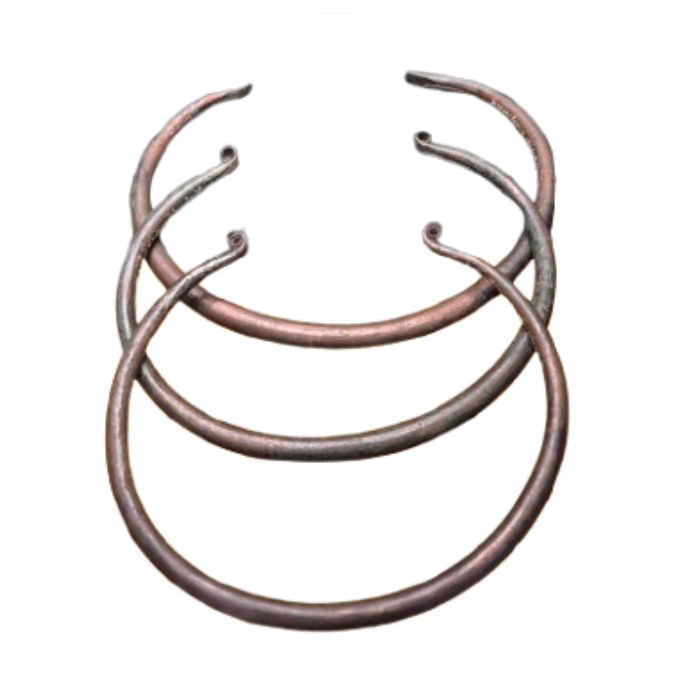
It is clear that even in the Bronze Age, more than 5 centuries ago, people had a wide choice of beautiful jewelry. Just like today, although there are now slightly more gemstones in jewelry.
The women of the Bronze Age had to adhere to traditions and their wallets when choosing their jewelry. That is different today because women can now choose from the jewelry they like, traditional or not. The wallet still appears to be a factor.
Are you having trouble finding the right jewelry for your figure or face among all the choices available? FlorenceJewelshop has created a PDF that is packed with great tips to make choosing easier for you.
It is free, and you can request it by filling in the form below. The download link will then be sent to you.

"*" indicates required fields
Florence from FlorenceJewelshop