
 NL
NL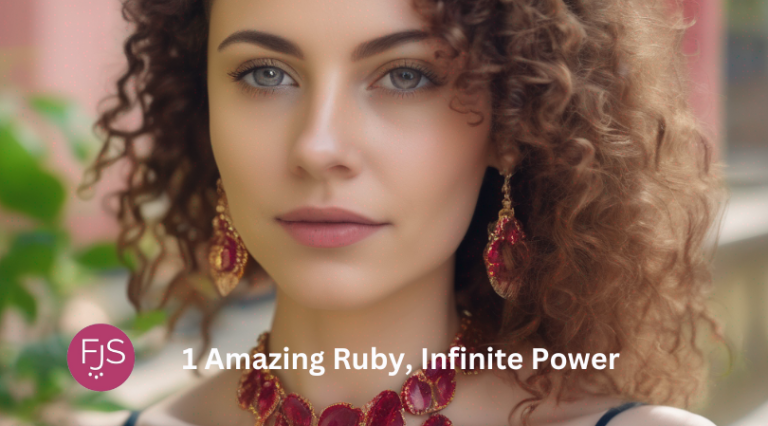
This stunning red gemstone has long been a symbol of power, passion, wealth, love, and even imagination. July birthday girls are extra lucky, ruby is their birthstone (and yes, that includes me!). Tradition also says rubies are the perfect gift for a 15th or 40th anniversary, making them even more meaningful to wear or share.

It’s not just precious, it’s bloody beautiful.
Who wouldn’t want a gemstone that radiates beauty and power? In this blog, I’ll walk you through all the fascinating features of Ruby. And trust me, by the end, you’ll be just as convinced as I am: everyone needs at least one piece of ruby jewelry in their life!
Why do you need a ruby?
For centuries, the ruby has been a symbol of wealth and protection. Worn close to the heart, it was believed to safeguard not only your home, but also your land and valuables. Even more, it promised the wearer a life of peace, love, and wisdom, free from danger.
A soldier’s secret weapon?
Rubies, especially the Burmese variety, were once thought to make warriors invincible. But there was a catch: wearing it wasn’t enough. To truly gain its power, the ruby had to become part of the body. Only then could it protect a soldier from bullets and swords.
Unfortunately, historical records don’t tell us how they managed this. Swallowing a ruby clearly wasn’t the solution, especially not in the middle of battle! Could it have been implanted under the skin? That would’ve been risky back then, with little to no medical care. If you have any ideas or know more about this legend, I’d love to hear your thoughts in the comments!
The Hanza and the ruby myth
In 1892, a tribe called the Hanza, from the Kashmir/Pakistan region, believed that red gemstones like rubies or garnets could cause wounds even more severe than bullets. During their battles with the British, they tested this belief—sadly, with no success. It’s a powerful example of how deeply people have believed in the mystical powers of rubies over time.


The Healing Power of Rubies
Like many other gemstones, the ruby has long been believed to possess powerful healing properties. But unlike most remedies, this one comes with a luxury price tag! In ancient practices, rubies were ground into a fine powder and mixed with water to treat digestive issues. The stone was also said to purify the blood and act as an antidote to poison, an elegant cure, indeed.
A Hypnotic Gemstone
In both science and hypnotism, the link between color and emotional or physical well-being continues to spark interest. Renowned gemologist Dr. George Frederick Kunz once remarked:
“It is impossible to over-estimate the effect of color in determining the supposed influence of gems upon the fortunes or health of the wearers.”
According to practitioners, ruby’s rich red hue emits stimulating, warming light rays, which are believed to energize the body and spirit. In contrast, blue-violet gemstones are thought to produce calming effects. Whether you believe in it or not, color certainly plays a powerful role in our emotions, and rubies are undeniably mesmerizing.
The Magic of Imagination
Who doesn’t know The Wizard of Oz? In this timeless classic, Dorothy, a young farm girl whisked away to the Land of Oz, is gifted a magical pair of ruby slippers by Glinda, the Good Witch of the North. These glittering shoes aren’t just a fashion statement; they’re a symbol of hope, power, and the magic of imagination.
Interestingly, the slippers in the film were made of red rhinestones, not real rubies. More than five pairs were created for the movie, and they remain among the most iconic film props in history. One pair was even stolen from a museum in 2005 and recovered in 2018, sparking worldwide fascination. Now that’s the power of ruby red!


Wear a Ruby and Invite Love In
Love lives in the heart, and what color do we associate with the heart? Red. Deep, glowing, passionate red—just like the ruby. It’s no surprise this gemstone, second only to the diamond, has long been a favorite for engagement rings and romantic gifts.
But it’s not just about the color. Ruby red is something else entirely: rich, luminous, and full of life. This gem not only represents love, but it also embodies energy, passion, and power. Exactly what a lasting love needs to thrive.
Why Ruby is the Ultimate Symbol of Love
A ruby is unmistakably red. Not just any red, but a bold, fiery hue that has captivated hearts for centuries. Red symbolizes the intensity of love (like roses and hearts), the thrill of power (think red sports cars), and the vitality of life itself (red blood).
Legends say rubies bring fortune, health, and strength to those who wear them. Even more intriguing: wear a ruby on your left side, close to your heart, and you’ll become invincible to your enemies. No wonder rubies have remained coveted around the world and across generations.
With a hardness of 9 on the Mohs scale, rubies are nearly as durable as diamonds. They’re said to hold an eternal inner flame, impossible to extinguish, making them the perfect symbol of everlasting love. In ancient times, the ruby wasn’t just a gem—it was the wedding stone.
Curious to learn more about this fiery beauty? You’re not alone—this is one gem that truly deserves a closer look.


And That’s Not All: The Fascinating Features of Ruby
The ruby isn’t just beautiful, it’s legendary. Ranging in color from soft pink to deep blood-red, the most prized rubies are those with an intense, vivid red hue, often called “pigeon blood”. This extraordinary color is caused by the presence of chromium in the stone.
Rubies belong to the corundum family, just like sapphires. The name “ruby” comes from the Latin word rubens, meaning “red.” In ancient Sanskrit, the stone was known as ratnaraj, the king of gemstones. That already tells you how highly it’s been valued for centuries.
Perfectly Imperfect
One of Ruby’s most fascinating features? It’s not supposed to be perfect.
Most rubies have natural inclusions, tiny needle-like rutile strands known as silk. These aren’t flaws, but signs of authenticity. In fact, if a ruby appears flawless, it’s likely synthetic or heavily treated. Today, almost all rubies are heat-treated before cutting to enhance their color and clarity. This is a standard and accepted practice in the gem world.
But watch out: if you spot gas bubbles under magnification or see no inclusions at all, you may be looking at a synthetic stone.
Tough and Timeless
Rubies are extremely durable, second only to diamonds on the Mohs hardness scale, where they score a solid 9. This makes them perfect for daily wear and ideal for heirloom pieces. Alongside diamonds, sapphires, and emeralds, rubies have long been considered one of the “Big Four” precious gemstones, though that classification is becoming a bit dated in modern gemology.
Don’t Be Fooled
Since ancient Rome, ruby imitations have flooded the market. Red spinel and garnet are often passed off as real rubies, and by the 17th century, jewelers had even developed ways to place red-colored foil beneath imitation stones to mimic the ruby’s glow.
Fun Fact:
A magnificent lidded goblet from the 1600s, made of amber, emerald, enamel, and ruby, reflects ruby’s regal legacy.
A stunning golden fibula, crafted around 500 BC using the filigree technique, features a central ruby, showing how long this gem has been treasured.


Popular from the Stone Age until now?
A Ruby’s Long and Legendary Journey
For thousands of years, rubies have been celebrated and treasured. Even in Biblical times, the red gemstone was considered one of the most beautiful gifts God created. According to tradition, God instructed the high priest Aaron to wear a special breastplate over his heart, adorned with twelve gemstones, each representing one of the tribes of Israel. The ruby proudly took its place among these sacred stones.
But the Bible also offers a different perspective on the ruby’s value. The wise Job reminds us that while rubies are precious, there’s something even greater:
“Wisdom is more precious than rubies.”
Interestingly, rubies themselves later came to symbolize wisdom too—linking beauty, power, and intellect together in one dazzling gem.
Royal Obsession in Europe
In Europe, rubies became a favorite among royalty and the wealthy elite, not just for their beauty, but because they were believed to guarantee health, wealth, wisdom, and a passionate love life.
One colorful story from France tells of Madame Mendes, a woman convinced that gemstones were inhabited by spirits. She believed these spirits grew angry if the stones weren’t worn often enough. To keep the peace, she would wear as many rings as possible at once. She claimed that if she didn’t wear her ruby ring regularly, it would lose its shine.
However, since all her gems demanded attention, Madame Mendes often ended up looking like a walking Christmas tree, sparkling from head to toe.
Revered in India
India also has a long and deep relationship with rubies. For over 2,500 years, rubies have been mined and adored there. Hindus call ruby the “king of gemstones,” valuing it even more than diamonds or sapphires.
They also assigned meanings to the ruby’s shades of red, linking them to India’s ancient caste system. The finest rubies, those glowing with the vivid “red of the lotus,“ were associated with the highest caste, the Brahmins. These precious stones were believed to offer the wearer protection from all harm.
But there was a catch: a pure ruby was not supposed to touch lower-grade rubies or other gemstones. Otherwise, it would lose its sacred power.
This belief eerily mirrors India’s historical caste system, where strict separation between groups was enforced, ironically causing the very divisions and conflicts it was meant to prevent.


A Famous Member of the Ruby Family
The Legendary Sunrise Ruby
The most famous and most expensive ruby in the world is the Sunrise Ruby. While rubies are generally less costly than diamonds, this gem is a dazzling exception. In May 2015, it went under the hammer at Sotheby’s in Geneva, with an estimated value of $12 to $18 million. But the bidding escalated quickly, mostly over the phone, and within just seven minutes, the Sunrise Ruby was sold for over $30 million to an anonymous buyer. A world record for any colored gemstone.
Elizabeth Taylor’s Love for Rubies
One of the most glamorous ruby fans in history? Elizabeth Taylor. She was gifted several ruby-studded jewels by one of her seven husbands (yes, seven, and she married Richard Burton twice, giving her a whopping 16 engagement and wedding rings). When she passed away in 2011, her legendary jewelry collection went to auction and brought in an astounding $156.8 million.
Among the record-breaking pieces: a ring set with an 8.24-carat ruby that sold for $4.2 million, setting a new price-per-carat record for rubies at the time.
The Ruby That Disappeared: The Liberty Bell
Another member of the ruby family made headlines for a more mysterious reason: The Liberty Bell Ruby, the largest mined ruby in the world, vanished. Discovered in East Africa in the 1950s, this colossal gem weighed 8,500 carats and was sculpted into a miniature replica of the Liberty Bell, encrusted with 50 diamonds.
Valued at around $2 million, it was stolen from a jewelry store in Delaware in 2011. Despite a $10,000 reward and the eventual arrest of four men, the Liberty Bell Ruby has never been recovered.
The Star Among Rubies
Some rubies are born with a rare natural phenomenon known as asterism, a shimmering, star-like effect that appears on the surface. These star rubies display a three- or six-pointed star, created by tiny needle-like inclusions of rutile inside the stone.
To best showcase the star, these rubies are cut into smooth cabochons and typically set in rings, where the effect is most visible. When a light source moves over the surface, the star seems to dance, an imperfection that, in this case, makes the stone even more valuable.
-
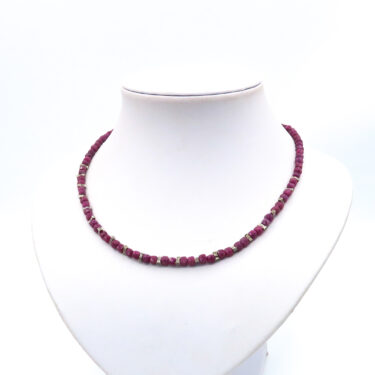
 red ruby necklace€ 120.00
The Bastards of the Family
In 1837, Mr. Gaudin created the first synthetic rubies, marking the beginning of a new era: the production of synthetic versions of many precious gemstones. It’s the inevitable fate of any gemstone rare and valuable enough that, sooner or later, someone will find a way to replicate it. By 1903, Mr. Verneuil had taken synthetic ruby production to the next level, developing a method to manufacture them on a commercial scale. By 1910, he was producing over 1,000 kilos a year.
The Down-to-Earth Ruby
The ruby is a fascinating and beautiful gemstone, surrounded by centuries of legend and belief. Worn close to the heart, or even placed inside the body, it is said to bring health, wealth, invincibility, and passion. Dreaming of rubies? Then, according to tradition, you’re destined to become an emperor or king. Another option: offer a ruby to a temple, and your future success is guaranteed.


All Good Things Come at a Price
Rubies are no exception. They are so valuable that fake rubies have flooded the world. Don’t get fooled—otherwise, your wealth will be as brittle as the fake stone you bought.
The rich and famous have always been drawn to rubies, captivated by their beauty and power. Queen Elizabeth II of England, for example, owned an impressive collection. One of the most famous pieces, the Timur Ruby, was gifted to her mother by the East India Company in 1851. There was just one small problem: later, scientists discovered that the stone wasn’t a ruby at all, but a spinel, still beautiful, but not the real thing.
In India, it was believed that donating rubies to the god Krishna secured a golden future. Such a gift was seen as insurance: a guaranteed rebirth as an emperor in the next life. No doubt, heaven is crowded with would-be emperors, all waiting for their insurance to pay out.
This gem can do more, much more
The Power of Rubies
Rubies have long been believed to preserve both mental and physical health. In the Middle Ages, they were even known as the gemstone of prophecy. Kings would watch their rubies closely, believing that if the gem’s color darkened, danger was near. Powdered ruby was also used as a remedy, either eaten to cure liver problems or as an antidote to poison.
Ruby is one of the four “precious gemstones,” a title earned because of their exceptional hardness. On the Mohs scale, rubies, sapphires, emeralds, and diamonds all rank at 9 or 10. Nothing can scratch a diamond—and only a diamond can scratch a ruby, sapphire, or emerald.
Rubies come in a glorious range of colors, from delicate pink to deep blood-red. The name ruby fits perfectly, coming from the Latin rubens, meaning “red.” In the world of rubies, color is everything, with shades like pigeon blood red, pinkish-red, and dark crimson stealing the show. Interestingly, rubies and sapphires are both forms of the mineral corundum; the difference is all in the color.
After reading all these stories about rubies, there’s really only one thought that keeps echoing in your mind:
‘I WANT A RUBY‘
Lucky me, I’m a July baby, a ruby girl by birthright! (And maybe, just maybe, my husband will read this blog post… just dropping a hint here.)
But even if you weren’t born in July, don’t let that stop you. Whatever your birthday month, go ahead and ask for rubies!
Want to learn more about rubies or other birthstones? I have a free e-book all about them, just let me know where to send it!

"*" indicates required fields
Florence from FlorenceJewelshop.